Buy deviled.com ?
We are moving the project
deviled.com .
Are you interested in purchasing the domain
deviled.com ?
domain@kv-gmbh.de · 0541-91531010
Buy deviled.com ?
Which company is the cornerstone of the German economy?
The cornerstone of the German economy is often considered to be the manufacturing and engineering company, Siemens. Siemens is a global powerhouse in the fields of electrification, automation, and digitalization, and it has a significant impact on the German economy through its extensive operations and workforce. The company's innovative technologies and products have contributed to Germany's reputation as a leader in industrial and technological advancements. **
What is the significance of chemistry as a cornerstone of the natural sciences?
Chemistry is a cornerstone of the natural sciences because it provides a fundamental understanding of the composition, structure, and properties of matter. It is essential for understanding the behavior of atoms and molecules, and how they interact to form the substances that make up the world around us. Chemistry also plays a crucial role in other natural sciences such as biology, physics, and environmental science, as it provides the foundation for understanding chemical reactions, energy transfer, and the behavior of materials. Overall, chemistry is significant as it provides the basis for understanding the natural world at the molecular level. **

Similar search terms for Thorsons-Cornerstone-Harriman-House
Top-Angebote
Products related to Thorsons-Cornerstone-Harriman-House:
-
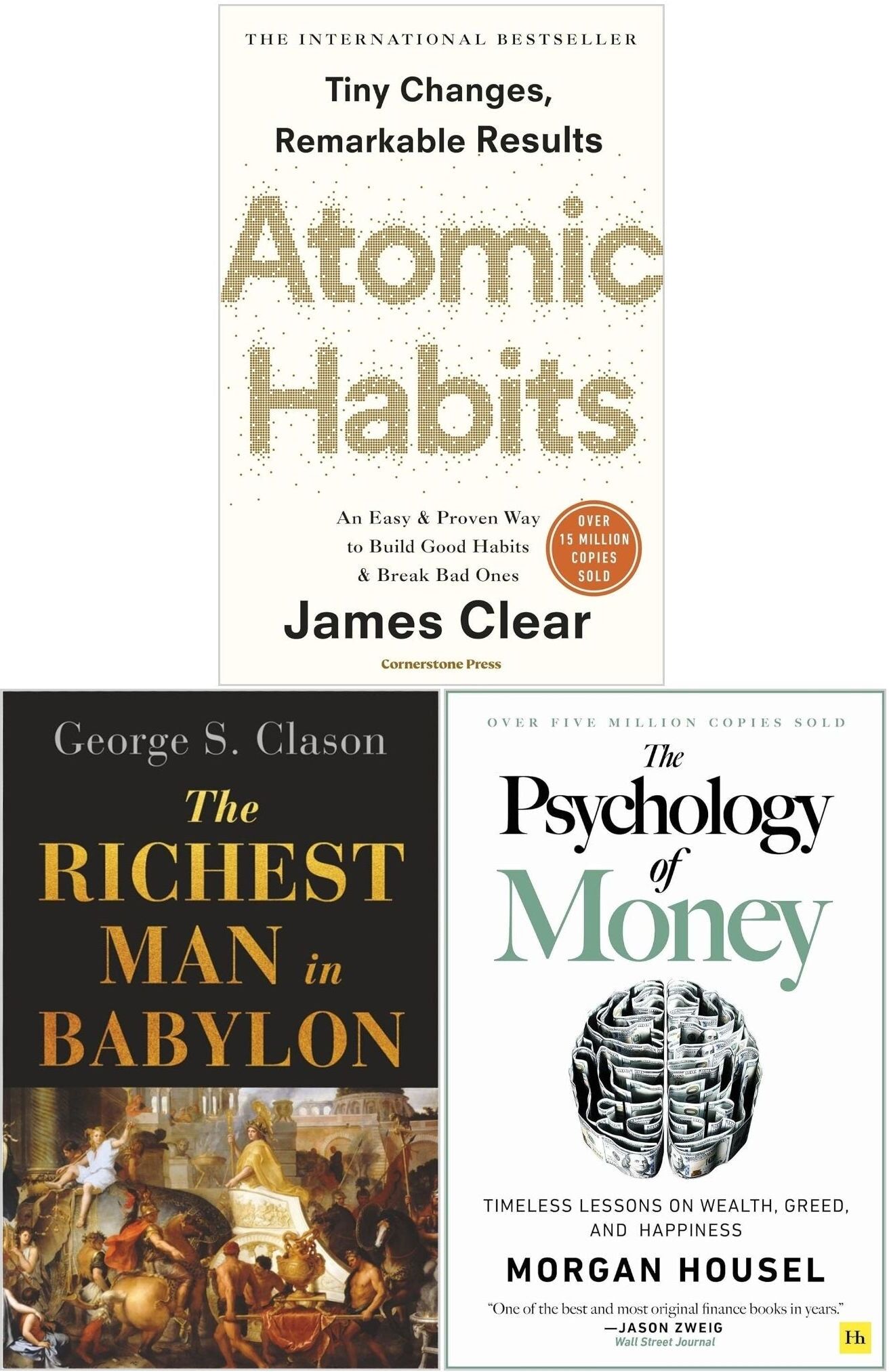
Wilco/Harriman House/Cornerstone The Richest Man In Babylon, The Psychology of Money and Atomic Habits 3 Books SetThe Richest Man In Babylon by George S. Clason This inspirational book is hailed as the greatest of books on finances. It unveils the secrets to wealth, providing priceless suggestions, advice, unforgettable parables, financial problem solving tools, and invaluable information which will get you on your way to riches. It is a must read for all who want financial stability. It rapidly became one of the best-selling books of all time. Through a series of enlightening parables set in the heart of ancient Babylon, Clason provided his readers with economic tips and tools for financial success. The Psychology of Money by Morgan Housel Doing well with money isn't necessarily about what you know. It's about how you behave. And behavior is hard to teach, even to really smart people. Money – investing, personal finance, and business decisions – is typically taught as a math-based field, where data and formulas tell us exactly what to do. But in the real world people don't make financial decisions on a spreadsheet. They make them at the dinner table, or in a meeting room, where personal history, your own unique view of the world, ego, pride, marketing, and odd incentives are scrambled together. Atomic Habits by James Clear Transform your life with tiny changes in behaviour, starting now. People think that when you want to change your life, you need to think big. But world-renowned habits expert James Clear has discovered another way. He knows that real change comes from the compound effect of hundreds of small decisions: doing two push-ups a day, waking up five minutes early, or holding a single short phone call. He calls them atomic habits.22,99 £*Shipping: 2,99 £Secure redirect to the provider
-
Harriman House The Choice Factory: 25 Behavioural Biases That Influence What We Buy - Non FictionTitle:. The Choice Factory: 25 behavioural biases that influence what we buy Overview:. Unlock the quiet forces behind everyday shopping with The Choice Factory, a compact, powerhouse non fiction guide by Richard Shotton. This essential handbook unveils 25 behavioural biases that subtly steer how we decide what to buy, why we reach for familiar brands, and how tiny shifts in presentation can shift outcomes dramatically. Each bias is explored with a crisp problem statement, a clear mechanism, and practical implications for marketers, product teams, and curious readers alike. Expect concise, punchy chapters that distill psychology into usable strategies—perfect for busy professionals who want fast, credible guidance without wading through jargon. From pricing psychology to social proof, from brand perception to decision fatigue, the book translates behavioural science into actionable tactics you can test in campaigns, packaging, and messaging. The tone remains approachable yet rigorous, offering real-world examples that illuminate how cognitive shortcuts shape purchase decisions in everyday life. Whether you’re building a brand, refining a product narrative, or simply fascinated by why people buy the way they do, this is a non fiction staple for a modern marketing bookshelf. It’s a trusted reference that elevates thinking, not just reading. What Makes This Book Stand Out:. Richard Shotton delivers a field-tested, journalistically tight tour through 25 biases with remarkable clarity. The book’s strength lies in its practical orientation: each bias is presented like a mini-play with a problem, a mechanism, and a deployable takeaway. Chapters read almost like a collection of micro-case studies, offering concrete examples drawn from advertising, retail, and consumer behavior that you can fold into your own work. The writing is sharp but accessible, avoiding dry theory while anchoring every claim in observable outcomes. The structure—brief introductions, sharp explanations, memorable prompts—makes The Choice Factory a ready-to-use manual rather than a passive theory book. For teams, it doubles as a desk reference; for learners, a compelling entry point into behavioural economics; for readers in general, a clear, thought-provoking journey into what really drives our choices. Who This Book Is Perfect For:. This is ideal for marketing professionals, product managers, and startup founders who want to translate psychology into practical strategy. It also suits students studying business, marketing, or psychology who crave concrete examples over theory. Gift buyers seeking a smart, evidence-based non fiction title for a colleague or student will find it both impressive and highly usable. Curious readers who enjoy understanding why brands behave the way they do will appreciate the accessible storytelling and the book’s promise of immediately applicable insights. If you’re building campaigns, designing pricing, or refining product experiences, The Choice...14,99 £*Shipping: 2,99 £Secure redirect to the provider
-
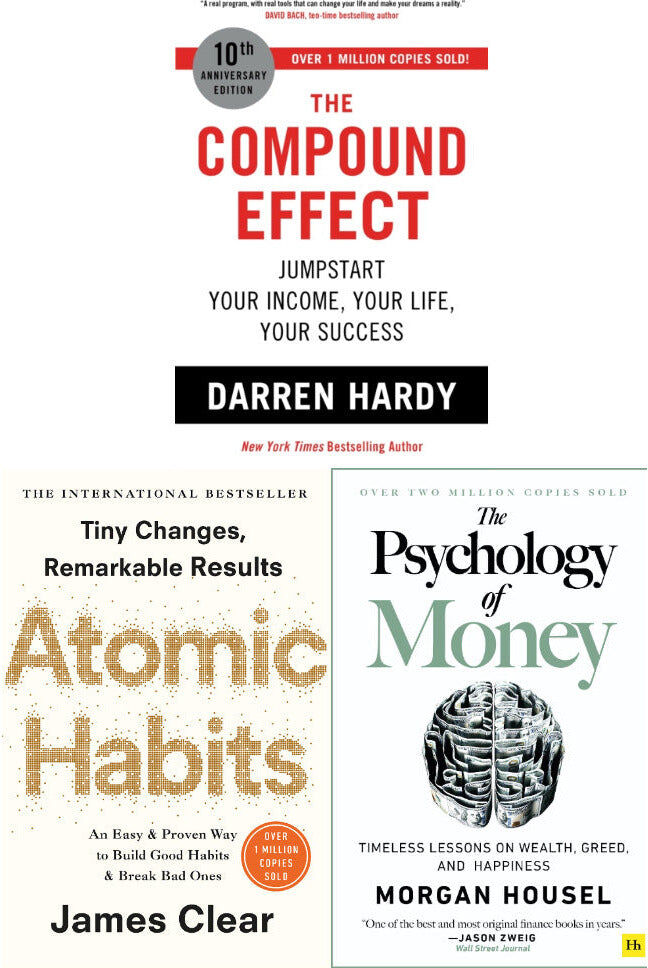
Harriman House Atomic Habits, The Compound Effect, The Psychology of Money 3 Books Collection SetAtomic Habits People think that when you want to change your life, you need to think big. But world-renowned habits expert James Clear has discovered another way. He knows that real change comes from the compound effect of hundreds of small decisions: doing two push-ups a day, waking up five minutes early, or holding a single short phone call. The Compound Effect As the central curator of the success media industry for over 25 years, author Darren Hardy has heard it all, seen it all, and tried most of it. This book reveals the core principles that drive success. The Compound Effect contains the essence of what every superachiever needs to know, practice, and master to obtain extraordinary success. Inside you will find strategies on: How to win--every time! The Psychology of Money Doing well with money isn't necessarily about what you know. It's about how you behave. And behavior is hard to teach, even to really smart people. Money investing, personal finance, and business decisions is typically taught as a math-based field, where data and formulas tell us exactly what to do. But in the real world people don't make financial decisions on a spreadsheet.22,95 £*Shipping: 2,99 £Secure redirect to the provider
-
Random House Business/Harriman House ltd Atomic Habits & The Psychology of Money – 2 Books Collection Set Personal Growth, Wealth & Mindset BestsellersAtomic Habits People think that when you want to change your life, you need to think big. But world-renowned habits expert James Clear has discovered another way. He knows that real change comes from the compound effect of hundreds of small decisions: doing two push-ups a day, waking up five minutes early, or holding a single short phone call. He calls them atomic habits. In this ground-breaking book, Clears reveals exactly how these minuscule changes can grow into such life-altering outcomes. He uncovers a handful of simple life hacks (the forgotten art of Habit Stacking, the unexpected power of the Two Minute Rule, or the trick to entering the Goldilocks Zone), and delves into cutting-edge psychology and neuroscience to explain why they matter. Along the way, he tells inspiring stories of Olympic gold medalists, leading CEOs, and distinguished scientists who have used the science of tiny habits to stay productive, motivated, and happy. The Psychology of Money Doing well with money isn't necessarily about what you know. It's about how you behave. And behaviour is hard to teach, even to really smart people. Money investing, personal finance, and business decisions is typically taught as a math-based field, where data and formulas tell us exactly what to do. But in the real world people don't make financial decisions on a spreadsheet. They make them at the dinner table, or in a meeting room, where personal history, your own unique view of the world, ego, pride, marketing, and odd incentives are scrambled together. In The Psychology of Money, award-winning author Morgan Housel shares 19 short stories exploring the strange ways people think about money and teaches you how to make better sense of one of life's most important topics.15,99 £*Shipping: 2,99 £Secure redirect to the provider

-
What is the name of the box used in a cornerstone laying ceremony?
The box used in a cornerstone laying ceremony is typically called a time capsule. This box is filled with items that represent the current time and are meant to be opened by future generations. It is then placed within the cornerstone of a building as a way to commemorate the construction and mark the beginning of a new chapter. **
-
What does it mean that the stone which the builders rejected has become the cornerstone?
The phrase "the stone which the builders rejected has become the cornerstone" is a biblical reference from Psalm 118:22 and is also mentioned in the New Testament. It signifies the idea that something or someone initially overlooked, rejected, or underestimated can ultimately become the most important or foundational element. In a broader sense, it can symbolize the unexpected rise to prominence or significance of something that was initially disregarded or undervalued. This phrase is often used to convey the message of resilience, redemption, and the idea that greatness can come from unexpected places. **
-
Why do Germans prefer creamy and mild over spicy and flavorful?
Germans tend to prefer creamy and mild flavors over spicy and flavorful ones due to their traditional culinary preferences. German cuisine often features dishes that are hearty and comforting, with a focus on simple and wholesome ingredients. Creamy and mild flavors are seen as more comforting and familiar, appealing to a wider range of palates. Additionally, the German palate tends to prioritize balance and subtlety in flavors, rather than bold and intense tastes. **
-
Why do Germans prefer creamy and mild instead of spicy and flavorful?
Germans tend to prefer creamy and mild flavors over spicy and flavorful ones due to their traditional culinary preferences. Creamy and mild dishes are often associated with comfort and familiarity in German cuisine. Additionally, the German palate tends to favor subtle and balanced flavors rather than bold and intense ones. This preference for creamy and mild dishes may also be influenced by the availability of ingredients and the influence of neighboring European cuisines. **


What does the verse in the Psalm mean, that the stone which the builders rejected has become the cornerstone?
The verse in Psalm 118:22, "The stone the builders rejected has become the cornerstone," is often interpreted as a metaphor for Jesus Christ. In the New Testament, this verse is referenced in connection with Jesus being rejected by the religious leaders of his time, but ultimately becoming the foundation of the Christian faith. It signifies the unexpected and transformative role that Jesus plays in the salvation of humanity, despite being initially rejected by those in power. This verse is a powerful reminder of the redemptive and transformative power of God, who can turn rejection into exaltation. **
Which house is better, house 1 or house 2?
It is difficult to determine which house is better without more specific information about the houses. Factors such as location, size, condition, and price all play a role in determining the better house. It would be helpful to compare the features and amenities of each house in order to make a fair assessment. **
Top-Angebote
Products related to Thorsons-Cornerstone-Harriman-House:
-
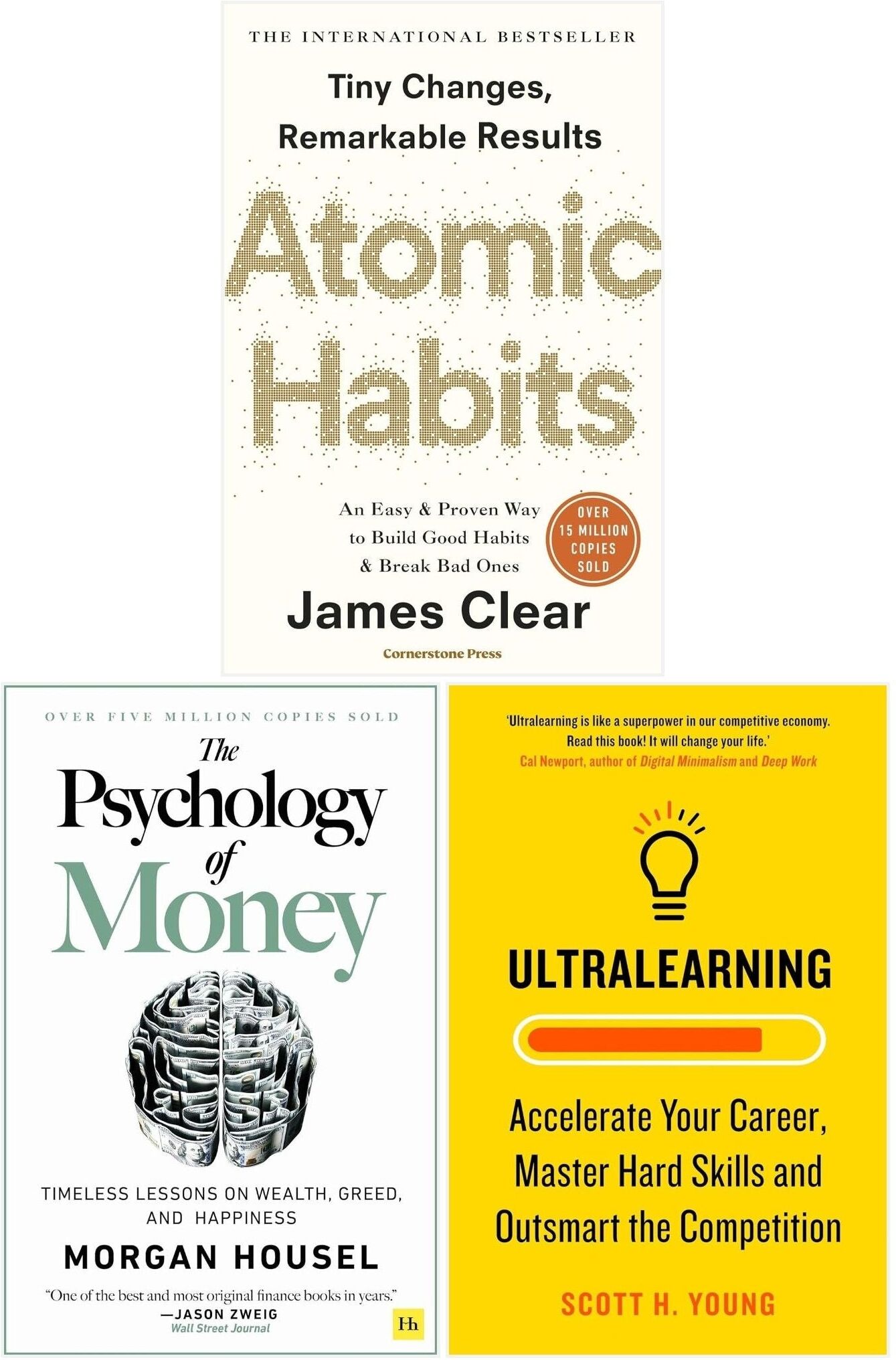
Thorsons/Cornerstone/Harriman House Ultralearning, Atomic Habits and The Psychology of Money 3 Books SetUltralearning Future-proof your career and maximize your competitive advantage by learning the skill necessary to stay relevant, reinvent yourself, and adapt to whatever the workplace throws your way in this essential guide. Faced with tumultuous economic times and rapid technological change, staying ahead in your career depends on continual learning―a lifelong mastery of new ideas, subjects, and skills. If you want to accomplish more and stand apart from everyone else, you need to become an ultralearner. Atomic Habits Transform your life with tiny changes in behaviour, starting now. People think that when you want to change your life, you need to think big. But world-renowned habits expert James Clear has discovered another way. He knows that real change comes from the compound effect of hundreds of small decisions: doing two push-ups a day, waking up five minutes early, or holding a single short phone call. The Psychology of Money Doing well with money isn't necessarily about what you know. It's about how you behave. And behavior is hard to teach, even to really smart people. Money investing, personal finance, and business decisions is typically taught as a math-based field, where data and formulas tell us exactly what to do. But in the real world people don't make financial decisions on a spreadsheet. They make them at the dinner table, or in a meeting room, where personal history, your own unique view of the world, ego, pride, marketing, and odd incentives are scrambled together.29,99 £*Shipping: 2,99 £Secure redirect to the provider
-
Simon & Schuster/Harriman House/Cornerstone Mind Hacking, The Psychology Of Money and Atomic Habits 3 Books Collection SetMind Hacking by Sir John Hargrave Have you ever wished you could reprogram your brain, just as a hacker would a computer? In this 3-step guide to improving your mental habits, learn to take charge of your mind and banish negative thoughts, habits, and anxiety—in just twenty-one days! A seasoned author, comedian, and entrepreneur, Sir John Hargrave once suffered from unhealthy addictions, anxiety, and poor mental health. After cracking the code to unlocking his mind’s full and balanced potential, his entire life changed for the better. In Mind Hacking, Hargrave reveals the formula that allowed him to overcome negativity and eliminate mental problems at their core. The Psychology Of Money by Morgan Housel Doing well with money isn't necessarily about what you know. It's about how you behave. And behavior is hard to teach, even to really smart people. Money – investing, personal finance, and business decisions – is typically taught as a math-based field, where data and formulas tell us exactly what to do. But in the real world people don't make financial decisions on a spreadsheet. They make them at the dinner table, or in a meeting room, where personal history, your own unique view of the world, ego, pride, marketing, and odd incentives are scrambled together. In The Psychology of Money, award-winning author Morgan Housel shares 19 short stories exploring the strange ways people think about money and teaches you how to make better sense of one of life's most important topics. Atomic Habits by James Clear Transform your life with tiny changes in behaviour, starting now. People think that when you want to change your life, you need to think big. But world-renowned habits expert James Clear has discovered another way. He knows that real change comes from the compound effect of hundreds of small decisions: doing two push-ups a day, waking up five minutes early, or holding a single short phone call. He calls them atomic habits.23,99 £*Shipping: 2,99 £Secure redirect to the provider
-
Wilco/Harriman House/Cornerstone The Richest Man In Babylon, The Psychology of Money and Atomic Habits 3 Books SetThe Richest Man In Babylon by George S. Clason This inspirational book is hailed as the greatest of books on finances. It unveils the secrets to wealth, providing priceless suggestions, advice, unforgettable parables, financial problem solving tools, and invaluable information which will get you on your way to riches. It is a must read for all who want financial stability. It rapidly became one of the best-selling books of all time. Through a series of enlightening parables set in the heart of ancient Babylon, Clason provided his readers with economic tips and tools for financial success. The Psychology of Money by Morgan Housel Doing well with money isn't necessarily about what you know. It's about how you behave. And behavior is hard to teach, even to really smart people. Money – investing, personal finance, and business decisions – is typically taught as a math-based field, where data and formulas tell us exactly what to do. But in the real world people don't make financial decisions on a spreadsheet. They make them at the dinner table, or in a meeting room, where personal history, your own unique view of the world, ego, pride, marketing, and odd incentives are scrambled together. Atomic Habits by James Clear Transform your life with tiny changes in behaviour, starting now. People think that when you want to change your life, you need to think big. But world-renowned habits expert James Clear has discovered another way. He knows that real change comes from the compound effect of hundreds of small decisions: doing two push-ups a day, waking up five minutes early, or holding a single short phone call. He calls them atomic habits.22,99 £*Shipping: 2,99 £Secure redirect to the provider
-
Harriman House The Choice Factory: 25 Behavioural Biases That Influence What We Buy - Non FictionTitle:. The Choice Factory: 25 behavioural biases that influence what we buy Overview:. Unlock the quiet forces behind everyday shopping with The Choice Factory, a compact, powerhouse non fiction guide by Richard Shotton. This essential handbook unveils 25 behavioural biases that subtly steer how we decide what to buy, why we reach for familiar brands, and how tiny shifts in presentation can shift outcomes dramatically. Each bias is explored with a crisp problem statement, a clear mechanism, and practical implications for marketers, product teams, and curious readers alike. Expect concise, punchy chapters that distill psychology into usable strategies—perfect for busy professionals who want fast, credible guidance without wading through jargon. From pricing psychology to social proof, from brand perception to decision fatigue, the book translates behavioural science into actionable tactics you can test in campaigns, packaging, and messaging. The tone remains approachable yet rigorous, offering real-world examples that illuminate how cognitive shortcuts shape purchase decisions in everyday life. Whether you’re building a brand, refining a product narrative, or simply fascinated by why people buy the way they do, this is a non fiction staple for a modern marketing bookshelf. It’s a trusted reference that elevates thinking, not just reading. What Makes This Book Stand Out:. Richard Shotton delivers a field-tested, journalistically tight tour through 25 biases with remarkable clarity. The book’s strength lies in its practical orientation: each bias is presented like a mini-play with a problem, a mechanism, and a deployable takeaway. Chapters read almost like a collection of micro-case studies, offering concrete examples drawn from advertising, retail, and consumer behavior that you can fold into your own work. The writing is sharp but accessible, avoiding dry theory while anchoring every claim in observable outcomes. The structure—brief introductions, sharp explanations, memorable prompts—makes The Choice Factory a ready-to-use manual rather than a passive theory book. For teams, it doubles as a desk reference; for learners, a compelling entry point into behavioural economics; for readers in general, a clear, thought-provoking journey into what really drives our choices. Who This Book Is Perfect For:. This is ideal for marketing professionals, product managers, and startup founders who want to translate psychology into practical strategy. It also suits students studying business, marketing, or psychology who crave concrete examples over theory. Gift buyers seeking a smart, evidence-based non fiction title for a colleague or student will find it both impressive and highly usable. Curious readers who enjoy understanding why brands behave the way they do will appreciate the accessible storytelling and the book’s promise of immediately applicable insights. If you’re building campaigns, designing pricing, or refining product experiences, The Choice...14,99 £*Shipping: 2,99 £Secure redirect to the provider
-
Which company is the cornerstone of the German economy?
The cornerstone of the German economy is often considered to be the manufacturing and engineering company, Siemens. Siemens is a global powerhouse in the fields of electrification, automation, and digitalization, and it has a significant impact on the German economy through its extensive operations and workforce. The company's innovative technologies and products have contributed to Germany's reputation as a leader in industrial and technological advancements. **
-
What is the significance of chemistry as a cornerstone of the natural sciences?
Chemistry is a cornerstone of the natural sciences because it provides a fundamental understanding of the composition, structure, and properties of matter. It is essential for understanding the behavior of atoms and molecules, and how they interact to form the substances that make up the world around us. Chemistry also plays a crucial role in other natural sciences such as biology, physics, and environmental science, as it provides the foundation for understanding chemical reactions, energy transfer, and the behavior of materials. Overall, chemistry is significant as it provides the basis for understanding the natural world at the molecular level. **
-
What is the name of the box used in a cornerstone laying ceremony?
The box used in a cornerstone laying ceremony is typically called a time capsule. This box is filled with items that represent the current time and are meant to be opened by future generations. It is then placed within the cornerstone of a building as a way to commemorate the construction and mark the beginning of a new chapter. **
-
What does it mean that the stone which the builders rejected has become the cornerstone?
The phrase "the stone which the builders rejected has become the cornerstone" is a biblical reference from Psalm 118:22 and is also mentioned in the New Testament. It signifies the idea that something or someone initially overlooked, rejected, or underestimated can ultimately become the most important or foundational element. In a broader sense, it can symbolize the unexpected rise to prominence or significance of something that was initially disregarded or undervalued. This phrase is often used to convey the message of resilience, redemption, and the idea that greatness can come from unexpected places. **
Similar search terms for Thorsons-Cornerstone-Harriman-House
-
Harriman House Atomic Habits, The Compound Effect, The Psychology of Money 3 Books Collection SetAtomic Habits People think that when you want to change your life, you need to think big. But world-renowned habits expert James Clear has discovered another way. He knows that real change comes from the compound effect of hundreds of small decisions: doing two push-ups a day, waking up five minutes early, or holding a single short phone call. The Compound Effect As the central curator of the success media industry for over 25 years, author Darren Hardy has heard it all, seen it all, and tried most of it. This book reveals the core principles that drive success. The Compound Effect contains the essence of what every superachiever needs to know, practice, and master to obtain extraordinary success. Inside you will find strategies on: How to win--every time! The Psychology of Money Doing well with money isn't necessarily about what you know. It's about how you behave. And behavior is hard to teach, even to really smart people. Money investing, personal finance, and business decisions is typically taught as a math-based field, where data and formulas tell us exactly what to do. But in the real world people don't make financial decisions on a spreadsheet.22,95 £*Shipping: 2,99 £Secure redirect to the provider
-
Random House Business/Harriman House ltd Atomic Habits & The Psychology of Money – 2 Books Collection Set Personal Growth, Wealth & Mindset BestsellersAtomic Habits People think that when you want to change your life, you need to think big. But world-renowned habits expert James Clear has discovered another way. He knows that real change comes from the compound effect of hundreds of small decisions: doing two push-ups a day, waking up five minutes early, or holding a single short phone call. He calls them atomic habits. In this ground-breaking book, Clears reveals exactly how these minuscule changes can grow into such life-altering outcomes. He uncovers a handful of simple life hacks (the forgotten art of Habit Stacking, the unexpected power of the Two Minute Rule, or the trick to entering the Goldilocks Zone), and delves into cutting-edge psychology and neuroscience to explain why they matter. Along the way, he tells inspiring stories of Olympic gold medalists, leading CEOs, and distinguished scientists who have used the science of tiny habits to stay productive, motivated, and happy. The Psychology of Money Doing well with money isn't necessarily about what you know. It's about how you behave. And behaviour is hard to teach, even to really smart people. Money investing, personal finance, and business decisions is typically taught as a math-based field, where data and formulas tell us exactly what to do. But in the real world people don't make financial decisions on a spreadsheet. They make them at the dinner table, or in a meeting room, where personal history, your own unique view of the world, ego, pride, marketing, and odd incentives are scrambled together. In The Psychology of Money, award-winning author Morgan Housel shares 19 short stories exploring the strange ways people think about money and teaches you how to make better sense of one of life's most important topics.15,99 £*Shipping: 2,99 £Secure redirect to the provider
-
Harriman House The Art Of Spending Money: Simple Choices For A Richer Life - Non Fiction - PaperbackTitle:. The Art of Spending Money: Simple Choices for a Richer Life Condition: New. Format: Paperback. ISBN: Overview:. Most personal finance advice centres on cutting back, avoiding purchases, and treating money as something to fear. This paperback breaks that cycle entirely. Written for readers who want to feel less anxious about their finances and more confident about their lifestyle choices, this guide redefines money management as a series of deliberate, values-driven decisions rather than endless restriction. Instead of drowning in spreadsheets or chasing unrealistic savings targets, you will learn how to evaluate purchases through the lens of long-term satisfaction, emotional well-being, and practical utility. The narrative moves smoothly between behavioural psychology, real-world financial traps, and straightforward strategies for building a spending habit that actually supports your goals. Whether you are navigating rising living costs, trying to break impulsive buying cycles, or simply curious about why some of us feel guilty for enjoying the things we earn, this book offers a refreshing reset. It does not preach deprivation; it teaches you how to extract maximum value from every transaction spent, turning everyday commerce into opportunities for clarity instead of regret. Designed as a modern companion for anyone seeking a healthier relationship with cash flow, retail therapy, and future planning, this volume distils complex financial behaviour into accessible, actionable insights that fit neatly onto your bedside table and into daily life. What Makes This Book Stand Out:. What separates this work from standard budgeting manuals is its refusal to treat money as an enemy or impose rigid rules that ignore human nature. Rather than focusing solely on mathematical optimisation, it explores the emotional drivers behind purchasing decisions and shows how subconscious habits quietly shape financial outcomes. The author draws on behavioural economics, sociological trends, and grounded personal anecdotes to illustrate why traditional saving cultures often fail to account for mental health, social connection, and experiential fulfillment. You will find practical frameworks for distinguishing between purchases that drain energy versus those that compound happiness, alongside clear methods for setting financial boundaries without self-punishment. The tone remains conversational yet authoritative, avoiding academic jargon while still delivering substantive analysis. Each chapter builds upon the last, guiding readers through common spending pitfalls, decision fatigue, and the cultural pressure to constantly upgrade or compare lifestyles. Ultimately, the book equips you with a mental model for evaluating cost versus true worth, helping you allocate resources toward experiences and goods that align with your actual priorities. By reframing spending as a tool rather than a threat, it delivers a sustainable approach to wealth building that feels...16,99 £*Shipping: 2,99 £Secure redirect to the provider
-
Harriman House The Naked Trader: How Anyone Can Make Money Trading Shares - 6th Edition - Non FictionTitle:. The Naked Trader: How Anyone Can Make Money Trading Shares - 6th Edition - Non Fiction Overview:. The Naked Trader: How Anyone Can Make Money Trading Shares is a practical, beginner-friendly guide to navigating the stock market with confidence. Now in its 6th edition, this non-fiction classic demystifies share trading, turning complex ideas into clear, actionable steps. Whether you're starting with a modest savings pot or looking to supplement your income, this book offers a grounded approach to building lasting trading habits. You’ll learn how to define your financial goals, assess risk tolerance, and create a simple, repeatable trading plan that fits your lifestyle. The author breaks down essential concepts—how to evaluate a company’s prospects, what drives share prices, and how to spot credible trading opportunities—without overwhelming jargon. Emphasis is placed on discipline, patience, and a steady, rules-based method rather than quick wins. The edition updates reflect evolving markets, yet the core message remains: anyone can learn to trade shares responsibly and sensibly. With relatable case studies, checklists, and practical exercises, this guide helps readers move from theory to real-world execution, giving you the tools to search for quality ideas, manage risk, and stay emotionally resilient in volatile markets. If you’re ready to take control of your financial future, this book offers a proven path to consistent, mindful trading. What Makes This Book Stand Out:. Where other trading books overload readers with jargon and hype, The Naked Trader delivers practical, no-nonsense guidance. It distills core trading principles into repeatable steps you can apply from day one, with emphasis on risk management, position sizing, and mental discipline. The author uses straightforward explanations, relatable examples, and a calm, encouraging tone to help you move from curiosity to action. The 6th edition updates keep pace with current market dynamics while preserving the core philosophy: success comes from consistent habits, a defined process, and honest assessment of your results. This book also helps you set realistic expectations about potential returns, avoiding overconfidence and fear-based decisions. It includes friendly roadmaps for getting started, plus templates you can reuse to track ideas, outcomes, and lessons. In short, this is a practical blueprint for building a personal trading system that serves your goals, not the other way around. Who This Book Is Perfect For:. This book is for absolute beginners to aspiring hobby traders seeking a solid foundation in share trading without the overwhelm. It's ideal for readers who prefer practical, step-by-step guidance over theoretical concepts, and for anyone who wants to learn risk-aware strategies that fit a busy schedule. If you’re saving toward a financial goal, looking to diversify your investments, or curious about how prices move, this book offers a gentle entry point with...14,99 £*Shipping: 2,99 £Secure redirect to the provider
-
Why do Germans prefer creamy and mild over spicy and flavorful?
Germans tend to prefer creamy and mild flavors over spicy and flavorful ones due to their traditional culinary preferences. German cuisine often features dishes that are hearty and comforting, with a focus on simple and wholesome ingredients. Creamy and mild flavors are seen as more comforting and familiar, appealing to a wider range of palates. Additionally, the German palate tends to prioritize balance and subtlety in flavors, rather than bold and intense tastes. **
-
Why do Germans prefer creamy and mild instead of spicy and flavorful?
Germans tend to prefer creamy and mild flavors over spicy and flavorful ones due to their traditional culinary preferences. Creamy and mild dishes are often associated with comfort and familiarity in German cuisine. Additionally, the German palate tends to favor subtle and balanced flavors rather than bold and intense ones. This preference for creamy and mild dishes may also be influenced by the availability of ingredients and the influence of neighboring European cuisines. **
-
What does the verse in the Psalm mean, that the stone which the builders rejected has become the cornerstone?
The verse in Psalm 118:22, "The stone the builders rejected has become the cornerstone," is often interpreted as a metaphor for Jesus Christ. In the New Testament, this verse is referenced in connection with Jesus being rejected by the religious leaders of his time, but ultimately becoming the foundation of the Christian faith. It signifies the unexpected and transformative role that Jesus plays in the salvation of humanity, despite being initially rejected by those in power. This verse is a powerful reminder of the redemptive and transformative power of God, who can turn rejection into exaltation. **
-
Which house is better, house 1 or house 2?
It is difficult to determine which house is better without more specific information about the houses. Factors such as location, size, condition, and price all play a role in determining the better house. It would be helpful to compare the features and amenities of each house in order to make a fair assessment. **
* All prices are inclusive of VAT and, if applicable, plus shipping costs. The offer information is based on the details provided by the respective shop and is updated through automated processes. Real-time updates do not occur, so deviations can occur in individual cases. ** Note: Parts of this content were created by AI.