Buy deviled.com ?
We are moving the project
deviled.com .
Are you interested in purchasing the domain
deviled.com ?
domain@kv-gmbh.de · 0541-91531010
Buy deviled.com ?
What is an NTC resistor in LTspice?
An NTC (Negative Temperature Coefficient) resistor in LTspice is a type of resistor that has a resistance value that decreases as the temperature increases. This type of resistor is commonly used in temperature sensing and compensation circuits. In LTspice, an NTC resistor can be modeled using a specific component symbol and its resistance-temperature characteristics can be defined using a temperature-resistance curve. This allows for accurate simulation of circuits that incorporate NTC resistors. **
How can one simulate a rectifier in LTspice?
To simulate a rectifier in LTspice, you can use a diode component to model the rectification process. Connect the diode in series with the input signal that you want to rectify. Make sure to set the diode's parameters, such as the forward voltage drop and reverse recovery time, to accurately represent the rectifier you are trying to simulate. By running a transient analysis on the circuit, you can observe the rectified output waveform and analyze its behavior. **


Similar search terms for LTspice
Top-Angebote
Products related to LTspice:
-
Herdez Spicy Guacamole Sauce 240gMade from fresh and simple ingredients, this guacamole carries a punch of chilli that adds an extra kick of flavour. Whether you're filling tacos, enhancing quesadillas, or looking for a perfect dip, Herdez Spicy Guacamole is the ideal choice. It's the authentic taste of Mexico, ready to bring a delicious twist to your dishes.4,25 £*Shipping: 3,90 £Secure redirect to the provider
-
Pimentae Tommys Spicy Margarita 125mlThe perfect pocket-sized serve of our Spicy Margarita (tequila, lime, agave, chilli). 15% ABV 125ML. Our multi-award-winning Spicy Margarita blends Mexico's freshest flavours; tequila, lime, chilli and agave. The perfect balance of sweet and spicy. If you like panties, you'll love them!4,44 £*Shipping: 4,90 £Secure redirect to the provider
-
Mitchell Beazley Chetna’s Healthy Indian Vegetarian by Chetna Makan – Nutritious & Flavorful RecipesHealthy Indian Vegetarian is a celebration of Indian food at its best; fresh, vibrant and supremely moreish.Chetna Makan's bestselling cookbooks combine her creative flavour twists with a love of simple Indian home cooking. Taking inspiration from the eclectic mix of vegetarian and vegan dishes found in Indian cuisine, these tempting recipes celebrate plant-based food at its best - delicious, vibrant, varied and nutritious. Nothing complicated; just beautiful food for everyone - and so healthy that you can enjoy it every day.With over 80 delicious recipes that vegetarians and even the most dedicated of meat-eaters can enjoy. Chetna shows just how creative you can be with even the most humble of vegetables. This book is packed with flavour and innovative ideas whilst being easy and accessible for home cooks.Recipes include:Garlic and tamarind soupGram flour stuffed chilliesCheese and potato chapatti sandwichCourgette kofta curryBeetroot and sweet potato kormaMasala paneer8,90 £*Shipping: 2,99 £Secure redirect to the provider
-
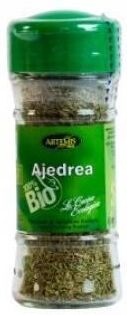
Herbes del Molí Spices "Savory" Bio 20g 20 grNutrition and Supplements Sauces and Condiments Herbes del Molí Spices "Savory" Bio 20g 20 gr It is used mainly to flavor vegetables and legumes. Also for dressing salads, scrambled eggs and for cooking fish and meat. From organic farming.1,76 £*Shipping: 3,99 £Secure redirect to the provider



-
How can I generate a triangular waveform in LTspice?
To generate a triangular waveform in LTspice, you can use a voltage-controlled voltage source (E) and a capacitor (C). Connect the output of the voltage-controlled voltage source to the positive terminal of the capacitor, and the negative terminal of the capacitor to ground. Then, connect a resistor from the negative terminal of the capacitor to the output of the voltage-controlled voltage source. Set the value of the voltage-controlled voltage source to a linear function, such as "V = 1k*time" to create a linearly increasing voltage over time, which will result in a triangular waveform across the capacitor. **
-
How can the differential voltage be calculated in LTspice?
In LTspice, the differential voltage can be calculated by using the "Voltage" probe. First, place two voltage probes at the two nodes between which you want to measure the differential voltage. Then, run the simulation and the voltage difference between the two nodes will be displayed on the waveform viewer. This will give you the differential voltage between the two nodes in the circuit. **
-
How do I charge 2 capacitors in series with LTspice?
To charge 2 capacitors in series with LTspice, you can create a simple circuit with two capacitors connected in series between a voltage source and ground. Make sure to specify the values of the capacitors and the voltage source in the circuit. Run a transient analysis simulation to observe how the capacitors charge up over time. You can also plot the voltage across each capacitor to see how it changes during the charging process. **
-
Why does LTspice show a minus sign before the ampere?
LTspice shows a minus sign before the ampere to indicate the direction of current flow. In LTspice, a negative current value indicates that the current is flowing in the opposite direction to the one defined in the circuit. This convention helps users quickly identify the direction of current flow in their circuits and analyze the behavior of components accordingly. **


Is this programming of the bridge rectifier in LTspice correct?
Without the specific details of the programming, it is difficult to determine if the bridge rectifier in LTspice is correct. However, to ensure the accuracy of the bridge rectifier, it is important to verify that the diodes are properly connected and oriented, and that the input and output connections are correctly configured. Additionally, it is essential to check the simulation results to confirm that the rectifier is functioning as expected. If the simulation results align with the expected behavior of a bridge rectifier, then the programming is likely correct. **
How can a Wheatstone bridge with an NTC be implemented in LTspice?
To implement a Wheatstone bridge with an NTC in LTspice, you can use four resistors to form the bridge and replace one of the resistors with the NTC. Connect the resistors and NTC in a bridge configuration, with the NTC in one of the legs. Then, use a voltage source to apply a known voltage across the bridge. Finally, use a voltage measurement device to measure the voltage across the bridge and analyze the output. This setup will allow you to simulate the behavior of the Wheatstone bridge with the NTC in LTspice. **
Top-Angebote
Products related to LTspice:
-
Pimentae Tommys Spicy Margarita 500mlA fiery twist on the classic Margarita (tequila, lime, chilli, agave). 15% ABV 50cl (5 serves). This service blends the best of Mexico's natural, fresh flavours. Our multi-award-winning Spicy Margarita blends tequila, lime, chilli and agave for the perfect balance of sweet and spicy. If you like panties, you'll love this!27,42 £*Shipping: 6,49 £Secure redirect to the provider
-
Herdez Spicy Chipotle Cremoso 240gThis is a creamy chipotle chilli sauce made by Herdez. It has a bit of smoky flavour and a smooth, creamy texture that makes your meat dishes even better. Even without grilling, it gives a hint of a creamy grill taste.4,25 £*Shipping: 3,90 £Secure redirect to the provider
-
Herdez Spicy Guacamole Sauce 240gMade from fresh and simple ingredients, this guacamole carries a punch of chilli that adds an extra kick of flavour. Whether you're filling tacos, enhancing quesadillas, or looking for a perfect dip, Herdez Spicy Guacamole is the ideal choice. It's the authentic taste of Mexico, ready to bring a delicious twist to your dishes.4,25 £*Shipping: 3,90 £Secure redirect to the provider
-
Pimentae Tommys Spicy Margarita 125mlThe perfect pocket-sized serve of our Spicy Margarita (tequila, lime, agave, chilli). 15% ABV 125ML. Our multi-award-winning Spicy Margarita blends Mexico's freshest flavours; tequila, lime, chilli and agave. The perfect balance of sweet and spicy. If you like panties, you'll love them!4,44 £*Shipping: 4,90 £Secure redirect to the provider
-
What is an NTC resistor in LTspice?
An NTC (Negative Temperature Coefficient) resistor in LTspice is a type of resistor that has a resistance value that decreases as the temperature increases. This type of resistor is commonly used in temperature sensing and compensation circuits. In LTspice, an NTC resistor can be modeled using a specific component symbol and its resistance-temperature characteristics can be defined using a temperature-resistance curve. This allows for accurate simulation of circuits that incorporate NTC resistors. **
-
How can one simulate a rectifier in LTspice?
To simulate a rectifier in LTspice, you can use a diode component to model the rectification process. Connect the diode in series with the input signal that you want to rectify. Make sure to set the diode's parameters, such as the forward voltage drop and reverse recovery time, to accurately represent the rectifier you are trying to simulate. By running a transient analysis on the circuit, you can observe the rectified output waveform and analyze its behavior. **
-
How can I generate a triangular waveform in LTspice?
To generate a triangular waveform in LTspice, you can use a voltage-controlled voltage source (E) and a capacitor (C). Connect the output of the voltage-controlled voltage source to the positive terminal of the capacitor, and the negative terminal of the capacitor to ground. Then, connect a resistor from the negative terminal of the capacitor to the output of the voltage-controlled voltage source. Set the value of the voltage-controlled voltage source to a linear function, such as "V = 1k*time" to create a linearly increasing voltage over time, which will result in a triangular waveform across the capacitor. **
-
How can the differential voltage be calculated in LTspice?
In LTspice, the differential voltage can be calculated by using the "Voltage" probe. First, place two voltage probes at the two nodes between which you want to measure the differential voltage. Then, run the simulation and the voltage difference between the two nodes will be displayed on the waveform viewer. This will give you the differential voltage between the two nodes in the circuit. **
Similar search terms for LTspice
-
Mitchell Beazley Chetna’s Healthy Indian Vegetarian by Chetna Makan – Nutritious & Flavorful RecipesHealthy Indian Vegetarian is a celebration of Indian food at its best; fresh, vibrant and supremely moreish.Chetna Makan's bestselling cookbooks combine her creative flavour twists with a love of simple Indian home cooking. Taking inspiration from the eclectic mix of vegetarian and vegan dishes found in Indian cuisine, these tempting recipes celebrate plant-based food at its best - delicious, vibrant, varied and nutritious. Nothing complicated; just beautiful food for everyone - and so healthy that you can enjoy it every day.With over 80 delicious recipes that vegetarians and even the most dedicated of meat-eaters can enjoy. Chetna shows just how creative you can be with even the most humble of vegetables. This book is packed with flavour and innovative ideas whilst being easy and accessible for home cooks.Recipes include:Garlic and tamarind soupGram flour stuffed chilliesCheese and potato chapatti sandwichCourgette kofta curryBeetroot and sweet potato kormaMasala paneer8,90 £*Shipping: 2,99 £Secure redirect to the provider
-
Herbes del Molí Spices "Savory" Bio 20g 20 grNutrition and Supplements Sauces and Condiments Herbes del Molí Spices "Savory" Bio 20g 20 gr It is used mainly to flavor vegetables and legumes. Also for dressing salads, scrambled eggs and for cooking fish and meat. From organic farming.1,76 £*Shipping: 3,99 £Secure redirect to the provider
-
Uplifted Finds Savory Squeak Plush Chicken Leg Toy 2 PcsIndulge your pets natural hunting and chewing instincts with the SavorySqueak Chicken Leg Plush. This playful, foodthemed toy is a feast for the senses, designed to keep small to large dogsand even curious catsentertained for hours. Featuring a...45,97 $*Shipping: 0,00 $Secure redirect to the provider
-
Novica Handmade Spicy Lad Ceramic Condiment BowlsA man guards petite covered bowls that can be filled with exquisite treats — salt and pepper, jellies and jams, spicy sauces. Master ceramist Putu Oka Mahendra's unique design is crafted by hand and expressively detailed.152,98 $*Shipping: 0,00 $Secure redirect to the provider
-
How do I charge 2 capacitors in series with LTspice?
To charge 2 capacitors in series with LTspice, you can create a simple circuit with two capacitors connected in series between a voltage source and ground. Make sure to specify the values of the capacitors and the voltage source in the circuit. Run a transient analysis simulation to observe how the capacitors charge up over time. You can also plot the voltage across each capacitor to see how it changes during the charging process. **
-
Why does LTspice show a minus sign before the ampere?
LTspice shows a minus sign before the ampere to indicate the direction of current flow. In LTspice, a negative current value indicates that the current is flowing in the opposite direction to the one defined in the circuit. This convention helps users quickly identify the direction of current flow in their circuits and analyze the behavior of components accordingly. **
-
Is this programming of the bridge rectifier in LTspice correct?
Without the specific details of the programming, it is difficult to determine if the bridge rectifier in LTspice is correct. However, to ensure the accuracy of the bridge rectifier, it is important to verify that the diodes are properly connected and oriented, and that the input and output connections are correctly configured. Additionally, it is essential to check the simulation results to confirm that the rectifier is functioning as expected. If the simulation results align with the expected behavior of a bridge rectifier, then the programming is likely correct. **
-
How can a Wheatstone bridge with an NTC be implemented in LTspice?
To implement a Wheatstone bridge with an NTC in LTspice, you can use four resistors to form the bridge and replace one of the resistors with the NTC. Connect the resistors and NTC in a bridge configuration, with the NTC in one of the legs. Then, use a voltage source to apply a known voltage across the bridge. Finally, use a voltage measurement device to measure the voltage across the bridge and analyze the output. This setup will allow you to simulate the behavior of the Wheatstone bridge with the NTC in LTspice. **
* All prices are inclusive of VAT and, if applicable, plus shipping costs. The offer information is based on the details provided by the respective shop and is updated through automated processes. Real-time updates do not occur, so deviations can occur in individual cases. ** Note: Parts of this content were created by AI.