Buy deviled.com ?
We are moving the project
deviled.com .
Are you interested in purchasing the domain
deviled.com ?
domain@kv-gmbh.de · 0541-91531010
Buy deviled.com ?
Why doesn't glycine have D- and L-forms?
Glycine does not have D- and L-forms because it is the simplest amino acid and has a hydrogen atom as its side chain. Unlike other amino acids that have a chiral carbon atom in their side chains, glycine's side chain is not chiral, meaning it does not have a mirror image form. As a result, glycine does not have D- and L-forms like other amino acids. **
What is the difference between D-glucose and L-glucose?
D-glucose and L-glucose are both isomers of glucose, meaning they have the same chemical formula but different spatial arrangements of their atoms. The main difference between the two is the orientation of the hydroxyl group on the chiral carbon farthest from the carbonyl group. In D-glucose, the hydroxyl group is on the right side, while in L-glucose, it is on the left side. This difference in orientation gives the two isomers distinct properties and biological functions. **

Similar search terms for L-Astemia-Dolcetto-d
Top-Angebote
Products related to L-Astemia-Dolcetto-d:
-
Barolo L''Astemia 2021The Barolo de L’Astemia is born as the most authentic expression of the Langhe tradition, a wine that encapsulates the deep identity of a winery firmly rooted in its territory. Here, the culture of Nebbiolo has been passed down for generations, and L’Astemia seeks to embody, with a free spirit and without constraints, the tradition of this great red wine. This Barolo represents the essence of the estate’s production: a classic red, without excess, deeply rooted in the Cannubi area, the historical and symbolic heart of the appellation. In this unique context, the winery pursues an idea of wine as a narrative of the land, capable of combining elegance, balance, and depth.L’Astemia produces this Barolo from Nebbiolo grapes sourced from selected vineyards near the winery. Harvesting takes place at full ripeness, followed by a traditional vinification: controlled fermentations and long maceration on the skins to enhance extraction, structure, and aromatic complexity. The aging process is lengthy and takes place between wood and bottle, where the wine evolves slowly, harmonizing tannins and aromatic components. The result is a classically styled Barolo that precisely reflects both the vintage and its terroir of origin.In the glass, Barolo L’Astemia shows a bright garnet red color, typical of Nebbiolo, with orange reflections that highlight its long maturation and the passage of time. On the nose, notes of fresh red fruit dominate, accompanied by hints of sweet spices and delicate aromas of dried flowers. On the palate, it is full and savory, with a dense yet elegant tannic structure, offering an intense but measured and refined profile for a Barolo. The sip is balanced and smooth, favoring finesse over power. It pairs naturally with red meats, game, and aged cheeses, complementing with elegance the most structured dishes of Piedmontese culinary tradition.33,00 £*Shipping: 48,00 £Secure redirect to the provider
-
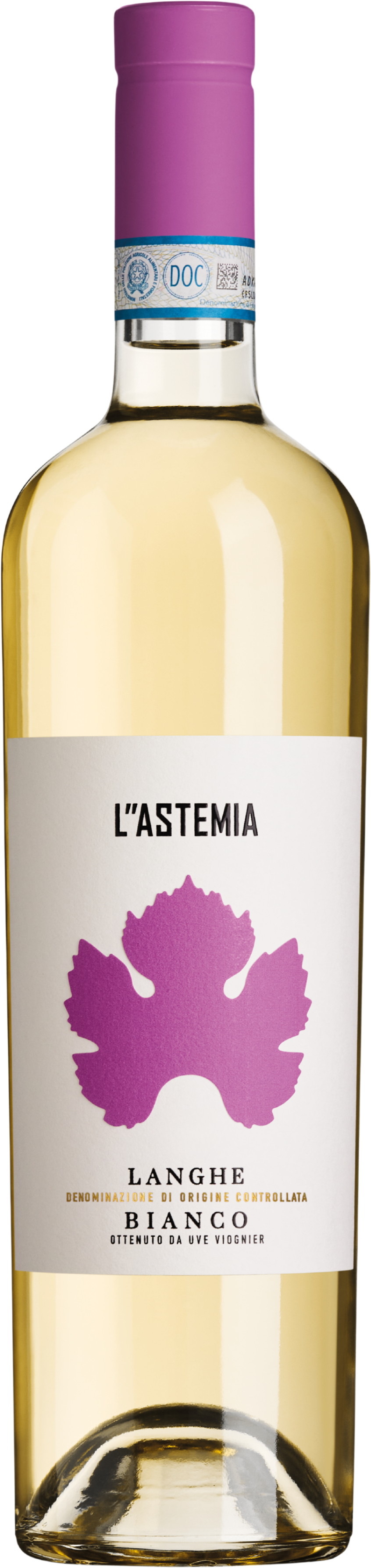
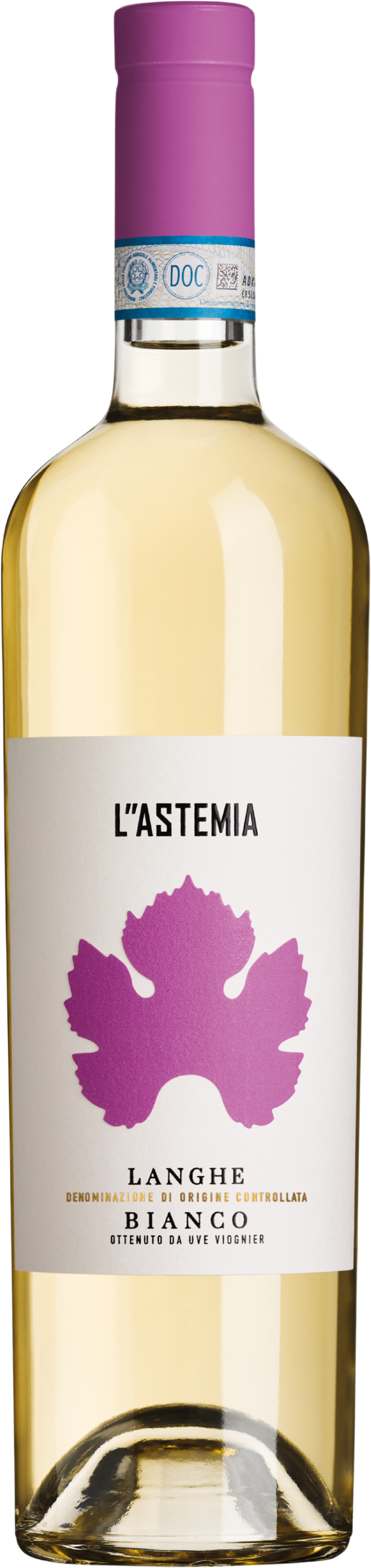
Viognier L''Astemia 2024The Viognier de L’Astemia is born in the heart of Monforte d’Alba. In the Langhe, this grape variety finds a surprisingly suitable terrain, producing whites that indeed challenge the Piedmontese conventions but find their own expressive path. The vision of L’Astemia is to treat each plant with great dedication, making the most of the sun-kissed vineyards caressed by the winds of the Langhe. It is a label that expresses a respectful agronomic management and an unconstrained winemaking philosophy.L’Astemia produces this Viognier with technical rigor. The vines grow on soils characterized by a matrix of marls and sands that give the grapes great finesse. The must ferments entirely in barrel, followed by a 10-month aging in tonneaux: a white that meets the Langhe love for oak. Taut, round, and of great structure, in every step the temperatures are controlled to ensure extraction and longevity.From an organoleptic perspective, the Viognier de L’Astemia reveals itself as a complex and multifaceted white wine, capable of a sensory synthesis that indeed combines structureimposing, vertical freshness, and aromatic exuberance. On the nose, it releases an enveloping sumptuousness, dominated by seductive fruity notes of peach that blend with elegant balsamic aromas. On the palate, the body is full and generous, but perfectly balanced by a decisive vein of savoriness that makes it substantial and pleasant. It finds its ideal pairing with dishes based on white meats, structured fish preparations, and medium-aged cheeses. A confirmation of the exuberance of one of the most original modern realities of the Langhe.23,00 £*Shipping: 48,00 £Secure redirect to the provider
-
Viognier L''Astemia 2023The Viognier de L’Astemia is born in the heart of Monforte d’Alba. In the Langhe, this grape variety finds a surprisingly suitable environment, producing white wines that challenge Piedmontese conventions while forging their own expressive path. L’Astemia’s vision is to treat each vine with great dedication, making the most of vineyards kissed by the sun and caressed by the winds of the Langhe. This label is the expression of respectful vineyard management and a winemaking philosophy free from constraints.L’Astemia produces this Viognier with technical precision. The vines grow on soils characterized by marl and sand, which give the grapes remarkable finesse. The must ferments entirely in barrel, followed by 10 months of aging in tonneaux: a white wine that embraces the Langhe’s affinity for oak. Tense, rounded, and full-bodied, every stage is temperature-controlled to ensure optimal extraction and longevity.From an organoleptic perspective, Viognier de L’Astemia reveals itself as a complex and multifaceted white wine, capable of a sensory synthesis that combines impressive structure, vertical freshness, and aromatic exuberance. On the nose, it expresses an enveloping richness, dominated by alluring notes of peach intertwined with elegant balsamic aromas. On the palate, the body is full and generous, yet perfectly balanced by a pronounced vein of minerality and savoriness, giving it both substance and drinkability. It pairs beautifully with white meats, structured fish dishes, and medium-aged cheeses. A true testament to the exuberance of one of the most original modern producers of the Langhe.24,00 £*Shipping: 48,00 £Secure redirect to the provider
-
L''Astemia Riesling L'Astemia 2023The Riesling de L’Astemia is an elegant white wine with a great personality that originates in the Langhe, on soils capable of enhancing even international varieties. The vineyards are located between 420 and 450 meters above sea level with a south-facing exposure, where the Riesling Renano best expresses its identity through freshness, aromatic precision, and taste tension.The Riesling de L’Astemia undergoes a soft pressing followed by a cold maceration, a technique that preserves and amplifies the aromatic expression of the grape variety. Fermentation and maturation occur in part in steel and part in tonneau, followed by a bottle aging of about 9 months that contributes to defining complexity and balance. This winemaking process combines the purity of the fruit with the broader structure imparted by the wood.The Riesling de L’Astemia presents a pale yellow color with greenish reflections. The aromatic profile is broad, with notes of peach and white fruit followed by mineral and varietal hydrocarbon nuances. On the palate, it is vertical and tense, with a marked freshness and a well-defined sapidity.that accompanies the progression of the sip. It pairs well with a lemon risotto and shrimp.17,00 £*Shipping: 48,00 £Secure redirect to the provider


-
How can the formula be rearranged for l and d?
To rearrange the formula for l and d, we can isolate each variable on one side of the equation. For example, to solve for l, we can divide both sides of the equation by w to get l = V / w. Similarly, to solve for d, we can divide both sides by l to get d = V / l. By rearranging the formula in this way, we can easily calculate the values of l and d based on the given volume and width. **
-
Are glucose and glucose the D-glucose and L-glucose themselves?
No, glucose and L-glucose are not the same. Glucose refers to the simple sugar molecule that is commonly found in foods and used by the body for energy. D-glucose and L-glucose, on the other hand, refer to specific forms of glucose that differ in their molecular arrangement. D-glucose is the natural form of glucose found in the body and in foods, while L-glucose is a rare form that is not commonly found in nature. **
-
What is the difference between L-tartaric acid and D-tartaric acid?
L-tartaric acid and D-tartaric acid are mirror-image isomers of each other, known as enantiomers. The main difference between them is their spatial arrangement of atoms. L-tartaric acid has a left-handed configuration, while D-tartaric acid has a right-handed configuration. This difference in configuration gives them different properties, such as their ability to rotate plane-polarized light in opposite directions. Despite their differences, they have similar chemical and physical properties. **
-
Do D/D/D monsters count as D/D monsters?
Yes, D/D/D monsters do count as D/D monsters. D/D/D monsters are a subgroup within the larger D/D archetype, so they share the same naming convention and are considered part of the D/D family. This means that cards or effects that specifically refer to D/D monsters would also apply to D/D/D monsters. **
In the Fischer projection, which functional group is considered to determine the L- and D-form?
In the Fischer projection, the functional group that is considered to determine the L- and D-form is the highest numbered chiral center furthest from the carbonyl group. The configuration of this chiral center determines whether the molecule is classified as L or D. If the hydroxyl group is on the right side of the highest numbered chiral center, it is classified as D. If the hydroxyl group is on the left side, it is classified as L. **
What do the letters L and D mean on this arm brace and who is the manufacturer?
The letters L and D on the arm brace likely stand for "Left" and "Right," indicating which arm the brace is intended for. The manufacturer of the arm brace is likely the company whose logo is displayed on the product. Without more specific information or a visual reference, it is difficult to determine the exact manufacturer of the arm brace. **
Top-Angebote
Products related to L-Astemia-Dolcetto-d:
-
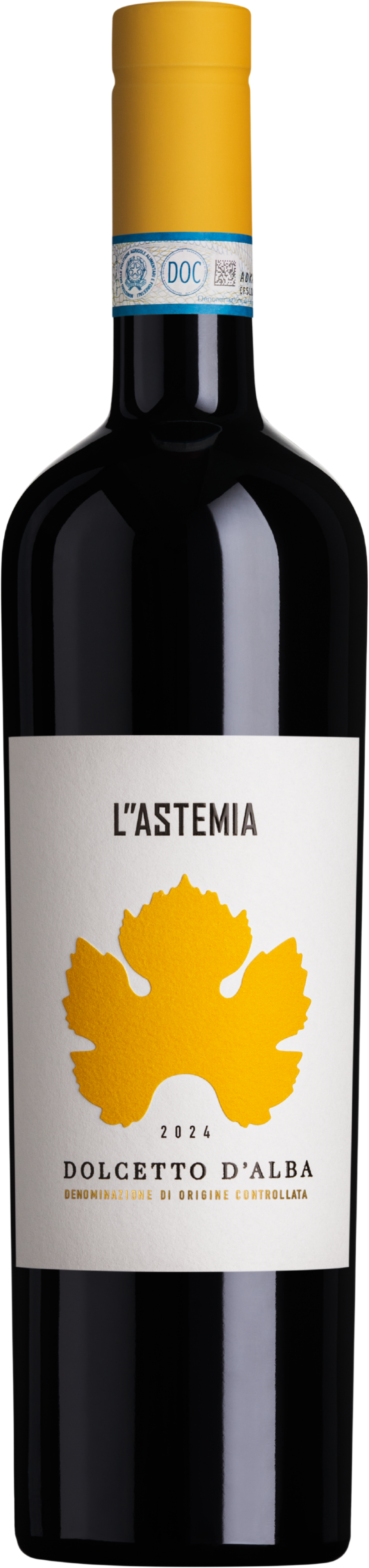
L''Astemia Dolcetto d'Alba L'Astemia 2024The Dolcetto d’Alba by L’'Astemia originates in the Langhe from vineyards located at about 400 meters above sea level, on mixed soil that ensures a balance between structure and fruity components. The Dolcetto, cultivated for centuries in these areas, finds here one of its most authentic expressions, thanks to a context that enhances its natural aromatic richness and drinkability. The winery's philosophy is straightforward and free from excess, aiming to deliver a territorial, immediate, and recognizable wine.The vineyards for the production of Dolcetto d'Alba by L’'Astemia have a southwest exposure, a condition that promotes a complete and regular ripening of the grapes. The winemaking process involves a maceration on the skins for about 12 days, followed by alcoholic fermentation. The aging takes place entirely in steel for about 8 months, a choice that preserves the freshness of the fruit and the expressive clarity, without resorting to wood or structural interventions.L’Astemia’s Dolcetto d’Alba appears in the glass as a deep ruby red with violet hues. The nose is fragrant and immediate, with notes of blackberry and blueberry, sweet spices such as cloves, and an almond-like finish typical of the variety. On the palate, it is dry and smooth, with moderate tannins and a gentle freshness that accompanies the sip without weighing it down. It pairs well with a dish of tajarin with meat ragù, a traditional Piedmontese speciality.13,00 £*Shipping: 48,00 £Secure redirect to the provider
-
Nascetta L''Astemia 2023The Nascetta de L'Astemia 2023 represents the winery’s commitment to rediscovering a gem of the Piedmontese wine landscape. An indigenous grape variety with ancient charm, Nascetta risked extinction in the last century and was saved only through the vision and perseverance of a small group of producers. L'Astemia celebrates this revival with a single-varietal vinification, aimed at restoring dignity to a grape capable of expressing the white, mineral side of a territory historically devoted to Nebbiolo. It is a wine that speaks of reclaimed tradition, combining the elegance of the past with contemporary technical precision.The vineyards dedicated to the production of Nascetta de L'Astemia are located at an altitude of 400 meters above sea level, with an eastern exposure. This positioning is strategic for the variety: the gentle morning light allows for gradual aromatic ripening and preserves the vibrant freshness that forms its backbone. The microclimate of the Langhe, combined with careful vineyard management focused on preserving fruit integrity, gives the wine a complexity that goes far beyond simple freshness, endowing it with a remarkable aging potential—rare for white wines of the region.For Nascetta de L'Astemia, varietal purity is enhanced through a delicate and respectful process. The transformation begins with a brief cold maceration, essential for gently extracting aromas from the skins, followed by soft pressing. The wine matures for six months in stainless steel tanks, thus preserving its expressive brightness, and then completes its journey with three months of bottle aging. This final rest is essential to allow the Nascetta to harmonize its components and develop the layered aromatic profile that makes it unique.16,00 £*Shipping: 48,00 £Secure redirect to the provider
-
Barolo L''Astemia 2021The Barolo de L’Astemia is born as the most authentic expression of the Langhe tradition, a wine that encapsulates the deep identity of a winery firmly rooted in its territory. Here, the culture of Nebbiolo has been passed down for generations, and L’Astemia seeks to embody, with a free spirit and without constraints, the tradition of this great red wine. This Barolo represents the essence of the estate’s production: a classic red, without excess, deeply rooted in the Cannubi area, the historical and symbolic heart of the appellation. In this unique context, the winery pursues an idea of wine as a narrative of the land, capable of combining elegance, balance, and depth.L’Astemia produces this Barolo from Nebbiolo grapes sourced from selected vineyards near the winery. Harvesting takes place at full ripeness, followed by a traditional vinification: controlled fermentations and long maceration on the skins to enhance extraction, structure, and aromatic complexity. The aging process is lengthy and takes place between wood and bottle, where the wine evolves slowly, harmonizing tannins and aromatic components. The result is a classically styled Barolo that precisely reflects both the vintage and its terroir of origin.In the glass, Barolo L’Astemia shows a bright garnet red color, typical of Nebbiolo, with orange reflections that highlight its long maturation and the passage of time. On the nose, notes of fresh red fruit dominate, accompanied by hints of sweet spices and delicate aromas of dried flowers. On the palate, it is full and savory, with a dense yet elegant tannic structure, offering an intense but measured and refined profile for a Barolo. The sip is balanced and smooth, favoring finesse over power. It pairs naturally with red meats, game, and aged cheeses, complementing with elegance the most structured dishes of Piedmontese culinary tradition.33,00 £*Shipping: 48,00 £Secure redirect to the provider
-
Viognier L''Astemia 2024The Viognier de L’Astemia is born in the heart of Monforte d’Alba. In the Langhe, this grape variety finds a surprisingly suitable terrain, producing whites that indeed challenge the Piedmontese conventions but find their own expressive path. The vision of L’Astemia is to treat each plant with great dedication, making the most of the sun-kissed vineyards caressed by the winds of the Langhe. It is a label that expresses a respectful agronomic management and an unconstrained winemaking philosophy.L’Astemia produces this Viognier with technical rigor. The vines grow on soils characterized by a matrix of marls and sands that give the grapes great finesse. The must ferments entirely in barrel, followed by a 10-month aging in tonneaux: a white that meets the Langhe love for oak. Taut, round, and of great structure, in every step the temperatures are controlled to ensure extraction and longevity.From an organoleptic perspective, the Viognier de L’Astemia reveals itself as a complex and multifaceted white wine, capable of a sensory synthesis that indeed combines structureimposing, vertical freshness, and aromatic exuberance. On the nose, it releases an enveloping sumptuousness, dominated by seductive fruity notes of peach that blend with elegant balsamic aromas. On the palate, the body is full and generous, but perfectly balanced by a decisive vein of savoriness that makes it substantial and pleasant. It finds its ideal pairing with dishes based on white meats, structured fish preparations, and medium-aged cheeses. A confirmation of the exuberance of one of the most original modern realities of the Langhe.23,00 £*Shipping: 48,00 £Secure redirect to the provider
-
Why doesn't glycine have D- and L-forms?
Glycine does not have D- and L-forms because it is the simplest amino acid and has a hydrogen atom as its side chain. Unlike other amino acids that have a chiral carbon atom in their side chains, glycine's side chain is not chiral, meaning it does not have a mirror image form. As a result, glycine does not have D- and L-forms like other amino acids. **
-
What is the difference between D-glucose and L-glucose?
D-glucose and L-glucose are both isomers of glucose, meaning they have the same chemical formula but different spatial arrangements of their atoms. The main difference between the two is the orientation of the hydroxyl group on the chiral carbon farthest from the carbonyl group. In D-glucose, the hydroxyl group is on the right side, while in L-glucose, it is on the left side. This difference in orientation gives the two isomers distinct properties and biological functions. **
-
How can the formula be rearranged for l and d?
To rearrange the formula for l and d, we can isolate each variable on one side of the equation. For example, to solve for l, we can divide both sides of the equation by w to get l = V / w. Similarly, to solve for d, we can divide both sides by l to get d = V / l. By rearranging the formula in this way, we can easily calculate the values of l and d based on the given volume and width. **
-
Are glucose and glucose the D-glucose and L-glucose themselves?
No, glucose and L-glucose are not the same. Glucose refers to the simple sugar molecule that is commonly found in foods and used by the body for energy. D-glucose and L-glucose, on the other hand, refer to specific forms of glucose that differ in their molecular arrangement. D-glucose is the natural form of glucose found in the body and in foods, while L-glucose is a rare form that is not commonly found in nature. **
Similar search terms for L-Astemia-Dolcetto-d
-
Viognier L''Astemia 2023The Viognier de L’Astemia is born in the heart of Monforte d’Alba. In the Langhe, this grape variety finds a surprisingly suitable environment, producing white wines that challenge Piedmontese conventions while forging their own expressive path. L’Astemia’s vision is to treat each vine with great dedication, making the most of vineyards kissed by the sun and caressed by the winds of the Langhe. This label is the expression of respectful vineyard management and a winemaking philosophy free from constraints.L’Astemia produces this Viognier with technical precision. The vines grow on soils characterized by marl and sand, which give the grapes remarkable finesse. The must ferments entirely in barrel, followed by 10 months of aging in tonneaux: a white wine that embraces the Langhe’s affinity for oak. Tense, rounded, and full-bodied, every stage is temperature-controlled to ensure optimal extraction and longevity.From an organoleptic perspective, Viognier de L’Astemia reveals itself as a complex and multifaceted white wine, capable of a sensory synthesis that combines impressive structure, vertical freshness, and aromatic exuberance. On the nose, it expresses an enveloping richness, dominated by alluring notes of peach intertwined with elegant balsamic aromas. On the palate, the body is full and generous, yet perfectly balanced by a pronounced vein of minerality and savoriness, giving it both substance and drinkability. It pairs beautifully with white meats, structured fish dishes, and medium-aged cheeses. A true testament to the exuberance of one of the most original modern producers of the Langhe.24,00 £*Shipping: 48,00 £Secure redirect to the provider
-
L''Astemia Riesling L'Astemia 2023The Riesling de L’Astemia is an elegant white wine with a great personality that originates in the Langhe, on soils capable of enhancing even international varieties. The vineyards are located between 420 and 450 meters above sea level with a south-facing exposure, where the Riesling Renano best expresses its identity through freshness, aromatic precision, and taste tension.The Riesling de L’Astemia undergoes a soft pressing followed by a cold maceration, a technique that preserves and amplifies the aromatic expression of the grape variety. Fermentation and maturation occur in part in steel and part in tonneau, followed by a bottle aging of about 9 months that contributes to defining complexity and balance. This winemaking process combines the purity of the fruit with the broader structure imparted by the wood.The Riesling de L’Astemia presents a pale yellow color with greenish reflections. The aromatic profile is broad, with notes of peach and white fruit followed by mineral and varietal hydrocarbon nuances. On the palate, it is vertical and tense, with a marked freshness and a well-defined sapidity.that accompanies the progression of the sip. It pairs well with a lemon risotto and shrimp.17,00 £*Shipping: 48,00 £Secure redirect to the provider
-
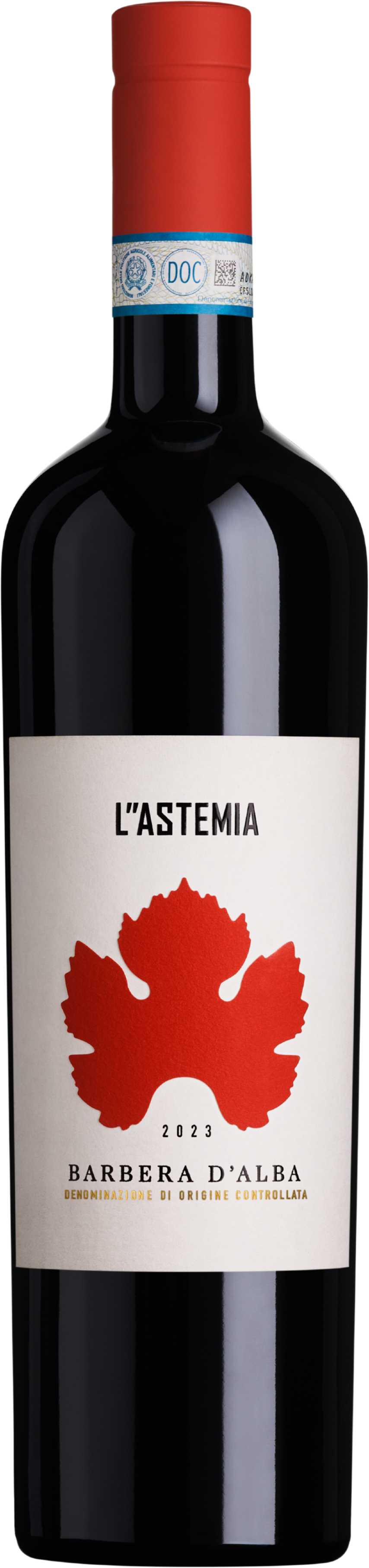
Barbera d'Alba L''Astemia 2023The Barbera d’Alba from L’Astemia is born in a reality of the Langhe with an unconventional character, founded by Sandra Vezza and built around an idea of wine that combines tradition and design. Between Barolo and Monforte d’Alba, the Barbera vineyards extend over hills where this grape variety, considered the queen of the Langhe, finds an authentic and direct expression. The vinification of Barbera d’Alba from L’Astemia involves a maceration on the skins of about 18 days, followed by fermentation and aging exclusively in steel for about 6 months. This choice enhances the purity of the fruit and the juiciest component of the grape variety, maintaining a clear and immediate profile without wood intervention.The Barbera d’Alba by L’Astemia presents a bouquet rich in red and black fruits, with notes of cherry, blackberry, and light balsamic and spicy nuances. The taste is full and enveloping, supported by a lively freshness and a balanced structure that prolongs the drinking experience. It pairs naturally with agnolotti del plin in roast sauce.16,00 £*Shipping: 48,00 £Secure redirect to the provider
-
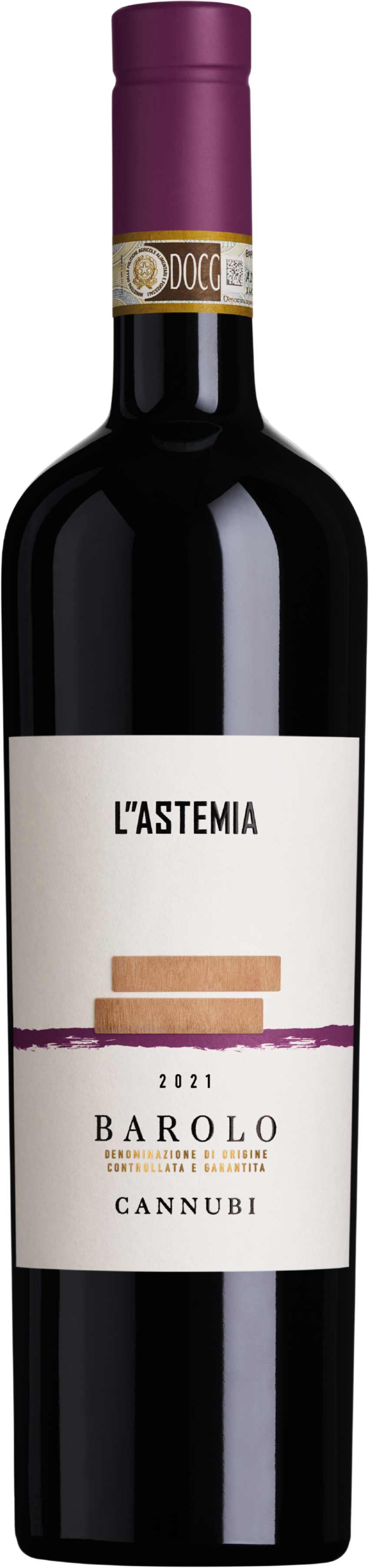
Barolo 'Cannubi' L''Astemia 2021The Barolo ‘Cannubi’ L’Astemia originates from one of the most famous and prestigious Additional Geographical Mentions of the entire Barolo municipality, a patch of land considered for centuries the qualitative heart of the denomination. The winery has its own vineyards at the beginning of the slope, in a position slightly lower than the summit and perfectly nestled in a unique microclimate. Here, the particular nature of the soils and optimal sun exposure allow for the production of wines that blend an important structure with a rare elegance. The Barolo ‘Cannubi’ from L’Astemia comes from rows located about 220 meters above sea level, with a southeast exposure that ensures perfect phenolic ripening of the grapes. The Nebbiolo benefits here from a soil that gives the wines a solid body yet always balanced by a vibrant and well-defined tannin. In the winery, a maceration on the skins of about 30-35 days is carried out to extract all the aromatic complexity. The aging process lasts for 36 months in large barrels, followed by an additional 6 months of resting in the bottle before the market release. The Barolo ‘Cannubi’ from L’Astemia presents itself in the glass with a deep garnet red color. On the nose, the olfactory profile opens with fresh notes of small red fruits that evolve into hints of dried flowers and ripe fruit, enriched by well-integrated spicy and toasted nuances. On the palate, it is velvety, characterized by a firm structure and a soft tannic texture that elegantly accompanies the sip. A classic pairing for this great red is Barolo braised meat.53,00 £*Shipping: 48,00 £Secure redirect to the provider
-
What is the difference between L-tartaric acid and D-tartaric acid?
L-tartaric acid and D-tartaric acid are mirror-image isomers of each other, known as enantiomers. The main difference between them is their spatial arrangement of atoms. L-tartaric acid has a left-handed configuration, while D-tartaric acid has a right-handed configuration. This difference in configuration gives them different properties, such as their ability to rotate plane-polarized light in opposite directions. Despite their differences, they have similar chemical and physical properties. **
-
Do D/D/D monsters count as D/D monsters?
Yes, D/D/D monsters do count as D/D monsters. D/D/D monsters are a subgroup within the larger D/D archetype, so they share the same naming convention and are considered part of the D/D family. This means that cards or effects that specifically refer to D/D monsters would also apply to D/D/D monsters. **
-
In the Fischer projection, which functional group is considered to determine the L- and D-form?
In the Fischer projection, the functional group that is considered to determine the L- and D-form is the highest numbered chiral center furthest from the carbonyl group. The configuration of this chiral center determines whether the molecule is classified as L or D. If the hydroxyl group is on the right side of the highest numbered chiral center, it is classified as D. If the hydroxyl group is on the left side, it is classified as L. **
-
What do the letters L and D mean on this arm brace and who is the manufacturer?
The letters L and D on the arm brace likely stand for "Left" and "Right," indicating which arm the brace is intended for. The manufacturer of the arm brace is likely the company whose logo is displayed on the product. Without more specific information or a visual reference, it is difficult to determine the exact manufacturer of the arm brace. **
* All prices are inclusive of VAT and, if applicable, plus shipping costs. The offer information is based on the details provided by the respective shop and is updated through automated processes. Real-time updates do not occur, so deviations can occur in individual cases. ** Note: Parts of this content were created by AI.