Buy deviled.com ?
We are moving the project
deviled.com .
Are you interested in purchasing the domain
deviled.com ?
domain@kv-gmbh.de · 0541-91531010
Buy deviled.com ?
What does "j'ai pas" or "je ne sais pas" mean?
"J'ai pas" is a colloquial way of saying "I don't have" in French, where the word "pas" replaces the word "de." On the other hand, "je ne sais pas" means "I don't know." Both phrases are commonly used in everyday conversations in French-speaking countries. **
What is the difference between c'est pas and ce n'est pas?
The difference between "c'est pas" and "ce n'est pas" lies in their formality. "C'est pas" is a colloquial and informal way of saying "it's not" in French, while "ce n'est pas" is the formal and standard way of expressing the same idea. "C'est pas" is commonly used in spoken language and informal writing, while "ce n'est pas" is more appropriate for formal writing and polite speech. **

Similar search terms for Franciacorta-Pas-Dosé-Elisabetta
Top-Angebote
Products related to Franciacorta-Pas-Dosé-Elisabetta:
-
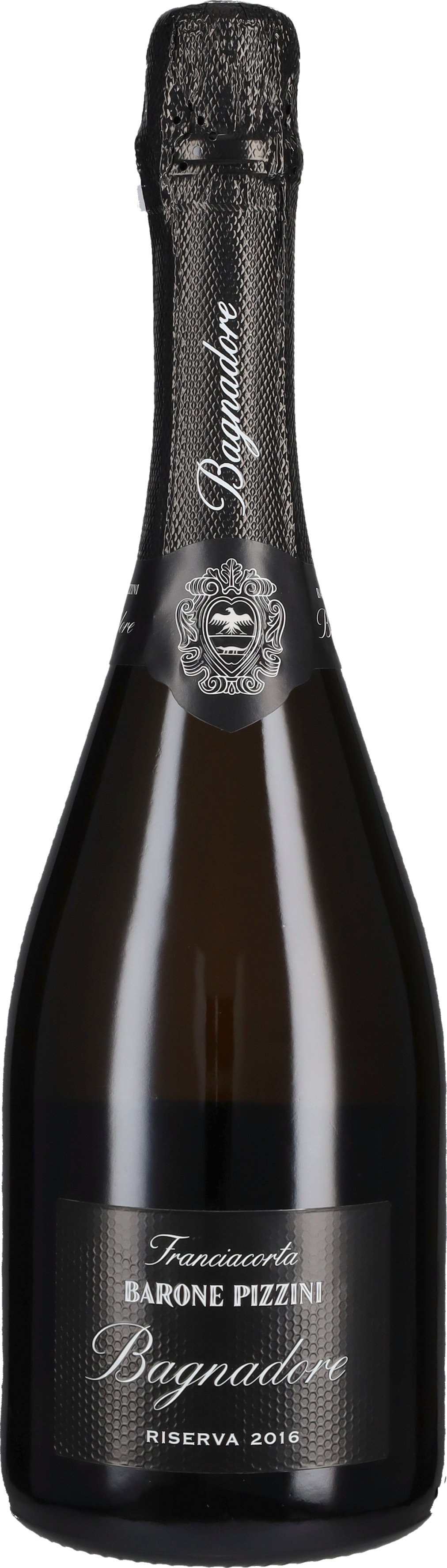
Franciacorta Pas Dosé Riserva 'Bagnadore' Barone Pizzini 2016Franciacorta Pas Dosé Riserva 'Bagnadore' is an elegant and articulate sparkling wine that stands as one of the highest expressions of Barone Pizzini's Lombard production reality. The grapes destined for this label come from a single vineyard named Roccolo, located near a forest that mitigates the climate, contributes to the important temperature swings between day and night and promotes biodiversity. To ensure consistent, superlative quality, Riserva 'Bagnadore' is produced in limited quantities only in the best vintages. Barone Pizzini Franciacorta Riserva Pas Dosé 'Bagnadore' is made from a blend of Chardonnay and Pinot Noir, varieties organically farmed on hillside soils of morainic origin consisting mainly of fine sand and pebbles. The vines, approximately 30 years of age, are located 250 meters above sea level. Once harvested, the grapes undergo a soft pressing, followed by alcoholic fermentation partly in steel tanks and partly in barriques, the same wine containers where the several-month maturation phase takes place. After blending, the sparkling wine base is placed in the bottle, and draught syrup is added for refermentation, according to the Metodo Classico, with at least 60 months of ageing on the lees in the glass. Concluding the sur lie stop, disgorging and subsequent topping off with the same wine is carried out. In the glass, Barone Pizzini's Riserva 'Bagnadore' Franciacorta Pas Dosé takes on a straw-yellow colour tending to golden with elegant bubbles. The olfactory range is defined by irresistible hints of apple, lemon peel, cedar and flowers, enriched by mineral notes and scents of bakery and toasted almond. Broad and creamy on the palate, with a pressing freshness that combines with the energetic savoury-mineral timbre in a very long finish.52,00 £*Shipping: 48,00 £Secure redirect to the provider
-
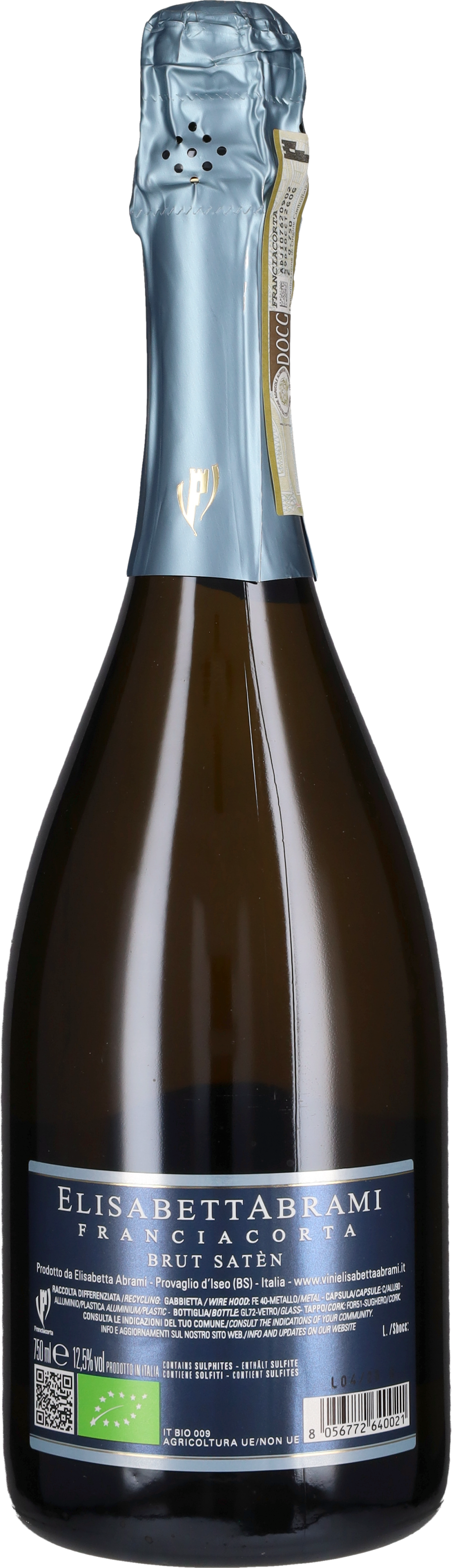
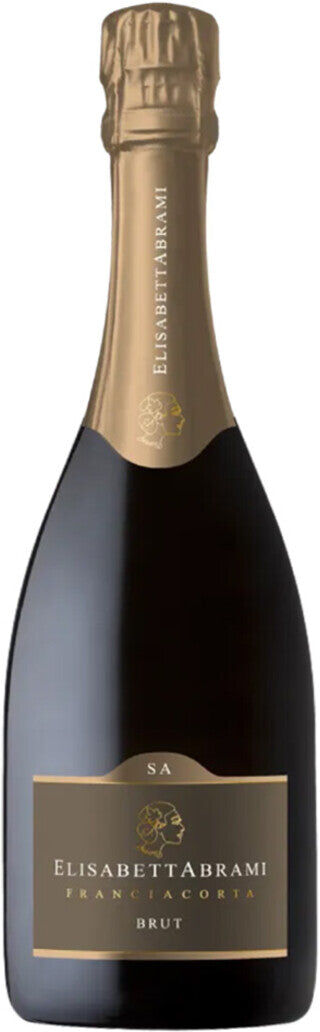
Franciacorta Saten Elisabetta AbramiFranciacorta Satèn is the label in Elisabetta Abrami's range that expresses above all the elegance and finesse of a refined Blanc des Blancs. It is a classic method typical of the appellation, inspired by the famous French Crémants, characterised by a more delicate perlage than Champagne. The extraordinary quality of the Chardonnay grapes and the subtle effervescence give the sip a lightness and pleasantness of great charm. Its floral scents, citrus and fruity aromas captivate from the very first sip. It is the perfect cuvée to approach the world of Franciacorta and to appreciate its limpid precision and stylistic freshness. Elisabetta Abrami's Satèn Franciacorta is produced on the company's beautiful estate in the Provaglio d'Iseo area. The vineyards are cultivated on the gentle hillsides that climb towards Mount Cognolo. The principles of organic farming are followed in the vineyard, in order to obtain genuine and healthy grapes, an essential prerequisite for the production of great wines. Made exclusively from Chardonnay grapes harvested by hand during the month of August, with selection of the best bunches in the vineyard. The grapes are pressed very softly and the flower must ferments partly in stainless steel tanks and partly in French oak barriques. After a few months of ageing, the base wines are blended and the second fermentation takes place in the bottle according to the Metodo Classico, with a minimum of 24 months' dégorgement sur lattes. The Metodo Classico Franciacorta Satèn Elisabetta Abrami represents the suave face of the Franciacorta territory. It is the ideal bottle to enjoy as an aperitif or with seafood or vegetable hors d'oeuvres with a delicate taste. To the eye, it is straw yellow in colour with bright, brilliant reflections. The perlage is particularly subtle and light. Fine and delicate, it has an olfactory profile dominated by aromas of white flowers, hints of lemon peel, aromas of green apple, white peach, tropical nuances, hints of bread crust and softness of small pastries. On the palate, it is pleasantly fruity, with a soft, velvety mouthfeel that stretches harmoniously towards a savoury finish of balanced freshness.23,00 £*Shipping: 48,00 £Secure redirect to the provider
-
Franciacorta Rosé Elisabetta AbramiThe Franciacorta Rosé by Elisabetta Abrami is a label that well represents the territory of Provaglio d'Iseo, one of the most suited areas for the cultivation of Pinot Noir in the entire denomination. The cuvée is indeed made with a significant percentage of the dark-skinned Burgundy grape, complemented by a portion of Chardonnay. Like all rosés, it is a Classic Method wine with good structure and aromatic richness, expressing pleasant notes of small red berries, supported by a clear vein of mineral freshness, which constitutes the stylistic hallmark of the Franciacorta territory. Due to these particular characteristics, it is a very gastronomic sparkling wine that pairs well with seafood appetizers, cold cuts, shrimp risotto, and pasta with scampi. The Rosé Franciacorta by Elisabetta Abrami is the result of careful organic cultivation of highly suited vineyards, located in a particularly cool and breezy area. The ideal climate and the predominantly very draining morainic nature of the soils have proven to be particularly suitable for the needs of the classic grapes of Champagne. The vineyards of Pinot Noir and Chardonnay are cultivated in the hilly area that rises towards the relief of Monte Cognolo, near Lake Iseo. The manual harvest takes place during the month of August, and the grapes are pressed separately by grape variety in a very gentle manner, with a brief contact with the skins. The must is vinified in white in temperature-controlled stainless steel tanks and in oak barriques. After a period of aging, the base wines are blended, and the second fermentation occurs in the bottle according to the Classic Method with a stay on the lees of at least 24 months before disgorgement.gives fragrant and crunchy fruity aromas, intense and rich, that lead to a fresh finish with good taste persistence.29,00 £*Shipping: 48,00 £Secure redirect to the provider

-
Does it say Je n'aime pas le chocolat or Je n'aime pas de chocolat?
The correct phrase is "Je n'aime pas le chocolat." This means "I don't like chocolate." The use of "le" indicates a specific, definite object, in this case, "the chocolate." Using "de" in this context would not be grammatically correct. **
-
When do you use ne pas in French negation and when do you use ne pas de?
In French, "ne pas" is used to form negation when the verb is directly negated, for example, "Je ne parle pas" (I do not speak). On the other hand, "ne pas de" is used when the negation involves a quantity or a partitive article, for example, "Je n'ai pas de pain" (I do not have any bread). So, "ne pas" is used for general negation of verbs, while "ne pas de" is used for negating the existence of a quantity or a partitive article. **
-
Do you urgently need Pas de Deux music?
If you urgently need Pas de Deux music, it would be best to search for existing music that fits your needs. There are many classical compositions and arrangements that can be used for Pas de Deux performances. You can also consider reaching out to composers or music libraries to see if they have any existing Pas de Deux music available for licensing. If time is of the essence, it may be helpful to explore pre-existing options before considering commissioning a new piece. **
-
What is the meaning of pas de trois?
Pas de trois is a classical ballet term that translates to "dance for three" in French. It refers to a dance piece or variation performed by three dancers. The pas de trois is a common feature in classical ballet repertoire, often showcasing the skills and artistry of the dancers as they move together in harmony and synchronization. This type of dance allows for intricate choreography and formations, creating a visually captivating performance for the audience. **

What were your most embarrassing fashion faux pas?
One of my most embarrassing fashion faux pas was when I wore a pair of pants that had a huge rip in the back without realizing it. I only found out when a friend pointed it out to me in public. Another time, I wore a shirt inside out all day without noticing. Both instances were quite embarrassing, but looking back, they make for funny stories. **
'At Pas de Deux, which theme should we choose?'
At Pas de Deux, you should choose a theme that reflects the elegance and grace of ballet, such as "Enchanted Garden" or "Midsummer Night's Dream." These themes can incorporate elements of nature, fantasy, and romance, creating a magical atmosphere for your event. Additionally, you may consider themes that celebrate the art of dance, such as "A Night at the Ballet" or "Dancing Through the Decades," which can showcase the beauty and history of ballet. Ultimately, the chosen theme should evoke the enchanting and timeless essence of ballet to create a memorable experience for your guests. **
Top-Angebote
Products related to Franciacorta-Pas-Dosé-Elisabetta:
-
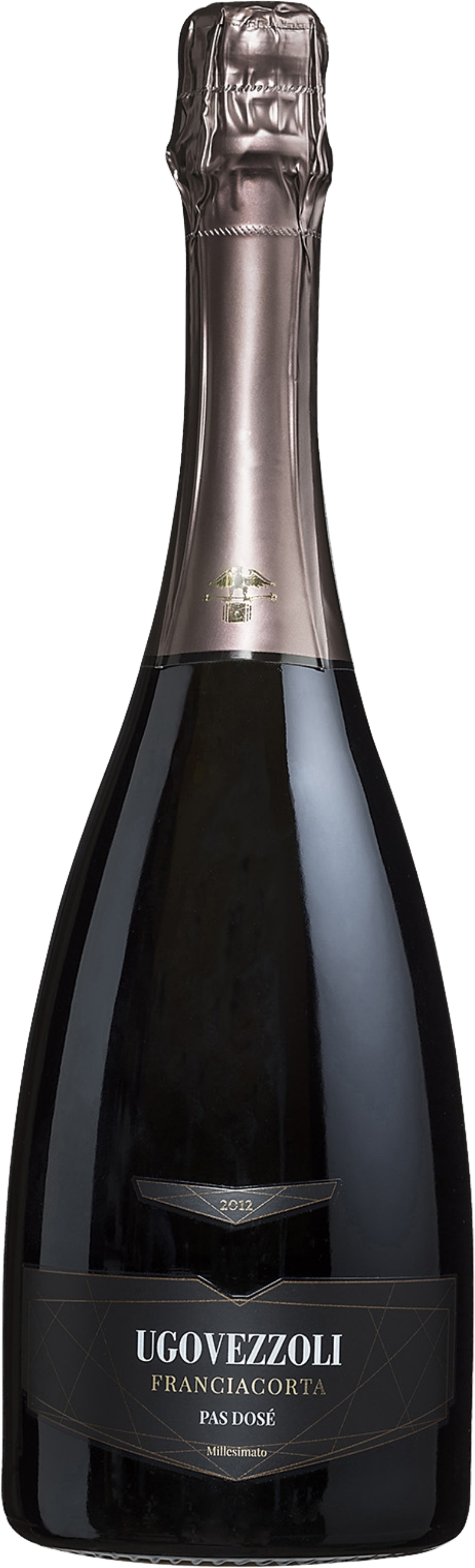
Franciacorta Pas Dosé Elisabetta Abrami 2018The Franciacorta Pas Dosé Millesimato by Elisabetta Abrami is the highest expression of purity, a tense and austere Metodo Classico, deep and decisive, dedicated to enthusiasts looking for wines that perfectly reflect the terroir and the character of the vintage. The choice of zero dosage implies the use of exceptional quality and ripeness grapes, which manage to find and express the right harmony over time without any need for added sugar. It is a bottle for connoisseurs, who love to find in each vintage the typical nuances of the seasonal trends of a single harvest. The Pas Dosé by Elisabetta Abrami is a Millesimato Franciacorta born from a very vocated terroir. The estate is located, in fact, near Provaglio d'Iseo, in an area with a particularly cool climate, but mitigated by the presence of Lake Iseo. The vineyards are situated on the hills that rise towards Mount Cognolo and are cultivated under organic farming. The cuvée is the result of grapes from different company vineyards of Chardonnay and Pinot Nero that are hand-picked with selection of the best bunches during the month of August. The soft pressing and vinification take place separately for each parcel. Fermentation occurs partly in stainless steel tanks and partly in French oak barriques. After a few months, the base wines are blended and the second fermentation is carried out in the bottle according to the Metodo Classico, with a sur lattes aging of at least 30 months, before proceeding to the dégorgement. The Millesimato Pas Dosé Elisabetta Abrami is a Franciacorta with a distinctive personality, without any concession to the easy pleasantness of softness. Of a bright yellow color with brilliant golden reflections, it is characterized by a very fine and persistent perlage. On the nose, it expresses aromas of yellow-fleshed fruit, hints of tropical fruit, honeyed softness, hints of bread crust and toasted dried fruit. With good structure and intensity, on the palate it is complex with a vertical and deep sip, anticipating a dry, savory, and very persistent finish.37,00 £*Shipping: 48,00 £Secure redirect to the provider
-
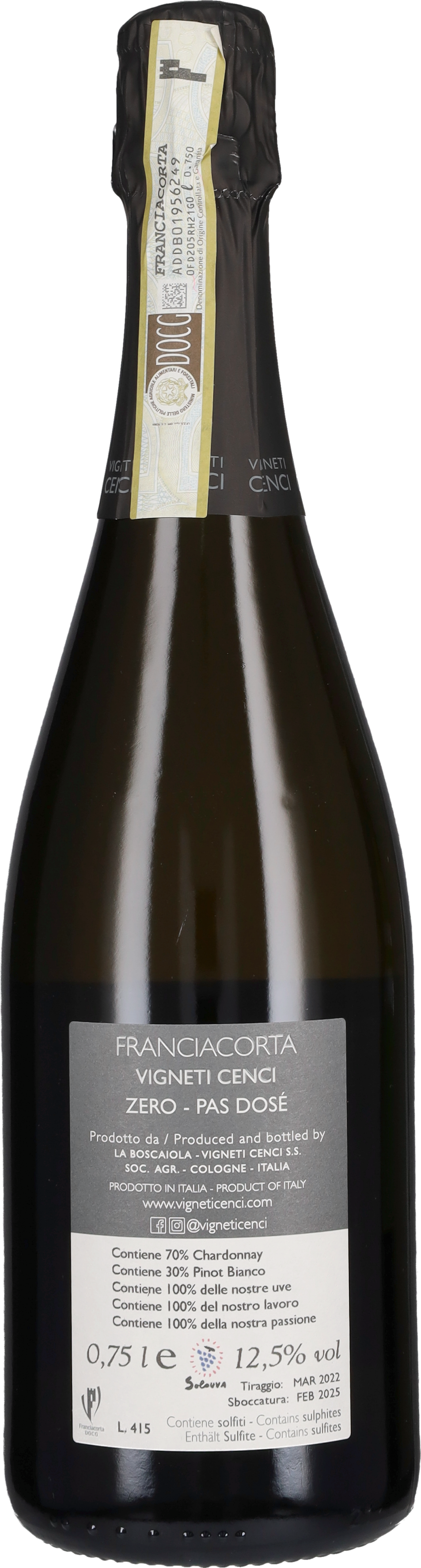
Franciacorta Pas Dosé Zero Vigneti CenciVigneti Cenci's Franciacorta Pas Dosé Zero is a bubbly with a dry and taut style, an expression of great purity being produced without any dosage. The headquarters of the winery is La Boscaiola, a beautiful 17th-century farmhouse located within the municipality of Cologne, at the south-western end of the Franciacorta production area. In this area, characterised by excellent exposure, an ideal microclimate for the cultivation of vines and soils particularly rich in mineral substances, wine production has always represented an activity of primary importance, carried on today by Giuliana Cenci together with her son Maurizio Bassi.Pas Dosé Zero Vigneti Cenci Franciacorta originates from a blend of Chardonnay (70%) and Pinot Bianco (30%) grapes grown within the municipality of Cologne, specifically on the slope of Monte Orfano. The soil is formed by an ancient, stepped colluvial layer on a rocky substratum of conglomerate gravels while the exposure is south-west. In the cellar, the grapes are vinified by soft pressing and subsequent alcoholic fermentation of the must at a controlled temperature. This is followed by re-fermentation in the bottle according to the Metodo Classico, using only sugars from the grapes rather than exogenous sugars. After at least 36 months of maturation on the lees, the sparkling wine is finally disgorged and then topped up with the same wine, without any dosage.Franciacorta Vigneti Cenci Pas Dosé Zero has a straw-yellow colour with greenish highlights and subtle effervescence. The nose has pleasant aromas of citrus fruits such as grapefruit and citron, supported by notes of pear and wisteria and a fine iodine mineral vein. Very savoury and energetic on the palate, characterised by an almost citrine freshness and a taut, distinctly mineral finish.28,00 £*Shipping: 48,00 £Secure redirect to the provider
-
Franciacorta Pas Dosé Riserva 'Bagnadore' Barone Pizzini 2016Franciacorta Pas Dosé Riserva 'Bagnadore' is an elegant and articulate sparkling wine that stands as one of the highest expressions of Barone Pizzini's Lombard production reality. The grapes destined for this label come from a single vineyard named Roccolo, located near a forest that mitigates the climate, contributes to the important temperature swings between day and night and promotes biodiversity. To ensure consistent, superlative quality, Riserva 'Bagnadore' is produced in limited quantities only in the best vintages. Barone Pizzini Franciacorta Riserva Pas Dosé 'Bagnadore' is made from a blend of Chardonnay and Pinot Noir, varieties organically farmed on hillside soils of morainic origin consisting mainly of fine sand and pebbles. The vines, approximately 30 years of age, are located 250 meters above sea level. Once harvested, the grapes undergo a soft pressing, followed by alcoholic fermentation partly in steel tanks and partly in barriques, the same wine containers where the several-month maturation phase takes place. After blending, the sparkling wine base is placed in the bottle, and draught syrup is added for refermentation, according to the Metodo Classico, with at least 60 months of ageing on the lees in the glass. Concluding the sur lie stop, disgorging and subsequent topping off with the same wine is carried out. In the glass, Barone Pizzini's Riserva 'Bagnadore' Franciacorta Pas Dosé takes on a straw-yellow colour tending to golden with elegant bubbles. The olfactory range is defined by irresistible hints of apple, lemon peel, cedar and flowers, enriched by mineral notes and scents of bakery and toasted almond. Broad and creamy on the palate, with a pressing freshness that combines with the energetic savoury-mineral timbre in a very long finish.52,00 £*Shipping: 48,00 £Secure redirect to the provider
-
What does "j'ai pas" or "je ne sais pas" mean?
"J'ai pas" is a colloquial way of saying "I don't have" in French, where the word "pas" replaces the word "de." On the other hand, "je ne sais pas" means "I don't know." Both phrases are commonly used in everyday conversations in French-speaking countries. **
-
What is the difference between c'est pas and ce n'est pas?
The difference between "c'est pas" and "ce n'est pas" lies in their formality. "C'est pas" is a colloquial and informal way of saying "it's not" in French, while "ce n'est pas" is the formal and standard way of expressing the same idea. "C'est pas" is commonly used in spoken language and informal writing, while "ce n'est pas" is more appropriate for formal writing and polite speech. **
-
Does it say Je n'aime pas le chocolat or Je n'aime pas de chocolat?
The correct phrase is "Je n'aime pas le chocolat." This means "I don't like chocolate." The use of "le" indicates a specific, definite object, in this case, "the chocolate." Using "de" in this context would not be grammatically correct. **
-
When do you use ne pas in French negation and when do you use ne pas de?
In French, "ne pas" is used to form negation when the verb is directly negated, for example, "Je ne parle pas" (I do not speak). On the other hand, "ne pas de" is used when the negation involves a quantity or a partitive article, for example, "Je n'ai pas de pain" (I do not have any bread). So, "ne pas" is used for general negation of verbs, while "ne pas de" is used for negating the existence of a quantity or a partitive article. **
Similar search terms for Franciacorta-Pas-Dosé-Elisabetta
-
Franciacorta Saten Elisabetta AbramiFranciacorta Satèn is the label in Elisabetta Abrami's range that expresses above all the elegance and finesse of a refined Blanc des Blancs. It is a classic method typical of the appellation, inspired by the famous French Crémants, characterised by a more delicate perlage than Champagne. The extraordinary quality of the Chardonnay grapes and the subtle effervescence give the sip a lightness and pleasantness of great charm. Its floral scents, citrus and fruity aromas captivate from the very first sip. It is the perfect cuvée to approach the world of Franciacorta and to appreciate its limpid precision and stylistic freshness. Elisabetta Abrami's Satèn Franciacorta is produced on the company's beautiful estate in the Provaglio d'Iseo area. The vineyards are cultivated on the gentle hillsides that climb towards Mount Cognolo. The principles of organic farming are followed in the vineyard, in order to obtain genuine and healthy grapes, an essential prerequisite for the production of great wines. Made exclusively from Chardonnay grapes harvested by hand during the month of August, with selection of the best bunches in the vineyard. The grapes are pressed very softly and the flower must ferments partly in stainless steel tanks and partly in French oak barriques. After a few months of ageing, the base wines are blended and the second fermentation takes place in the bottle according to the Metodo Classico, with a minimum of 24 months' dégorgement sur lattes. The Metodo Classico Franciacorta Satèn Elisabetta Abrami represents the suave face of the Franciacorta territory. It is the ideal bottle to enjoy as an aperitif or with seafood or vegetable hors d'oeuvres with a delicate taste. To the eye, it is straw yellow in colour with bright, brilliant reflections. The perlage is particularly subtle and light. Fine and delicate, it has an olfactory profile dominated by aromas of white flowers, hints of lemon peel, aromas of green apple, white peach, tropical nuances, hints of bread crust and softness of small pastries. On the palate, it is pleasantly fruity, with a soft, velvety mouthfeel that stretches harmoniously towards a savoury finish of balanced freshness.23,00 £*Shipping: 48,00 £Secure redirect to the provider
-
Franciacorta Rosé Elisabetta AbramiThe Franciacorta Rosé by Elisabetta Abrami is a label that well represents the territory of Provaglio d'Iseo, one of the most suited areas for the cultivation of Pinot Noir in the entire denomination. The cuvée is indeed made with a significant percentage of the dark-skinned Burgundy grape, complemented by a portion of Chardonnay. Like all rosés, it is a Classic Method wine with good structure and aromatic richness, expressing pleasant notes of small red berries, supported by a clear vein of mineral freshness, which constitutes the stylistic hallmark of the Franciacorta territory. Due to these particular characteristics, it is a very gastronomic sparkling wine that pairs well with seafood appetizers, cold cuts, shrimp risotto, and pasta with scampi. The Rosé Franciacorta by Elisabetta Abrami is the result of careful organic cultivation of highly suited vineyards, located in a particularly cool and breezy area. The ideal climate and the predominantly very draining morainic nature of the soils have proven to be particularly suitable for the needs of the classic grapes of Champagne. The vineyards of Pinot Noir and Chardonnay are cultivated in the hilly area that rises towards the relief of Monte Cognolo, near Lake Iseo. The manual harvest takes place during the month of August, and the grapes are pressed separately by grape variety in a very gentle manner, with a brief contact with the skins. The must is vinified in white in temperature-controlled stainless steel tanks and in oak barriques. After a period of aging, the base wines are blended, and the second fermentation occurs in the bottle according to the Classic Method with a stay on the lees of at least 24 months before disgorgement.gives fragrant and crunchy fruity aromas, intense and rich, that lead to a fresh finish with good taste persistence.29,00 £*Shipping: 48,00 £Secure redirect to the provider
-
Franciacorta Brut Magnum Elisabetta AbramiFranciacorta Satèn Magnum is the label in Elisabetta Abrami's range that expresses above all the elegance and finesse of a refined Blanc des Blancs. It is a classic method typical of the appellation, inspired by the famous French Crémants, characterised by a more delicate perlage than Champagne. The extraordinary quality of the Chardonnay grapes and the subtle effervescence give the sip a lightness and pleasantness of great charm. Its floral scents, citrus and fruity aromas captivate from the very first sip. It is the perfect cuvée to approach the world of Franciacorta and to appreciate its limpid precision and stylistic freshness. Elisabetta Abrami's Satèn Magnum Franciacorta is produced on the company's beautiful estate in the Provaglio d'Iseo area. The vineyards are cultivated on the gentle hillsides that climb towards Mount Cognolo. The principles of organic farming are followed in the vineyard, in order to obtain genuine and healthy grapes, an essential prerequisite for the production of great wines. Made exclusively from Chardonnay grapes harvested by hand during the month of August, with selection of the best bunches in the vineyard. The grapes are pressed very softly and the flower must ferments partly in stainless steel tanks and partly in French oak barriques. After a few months of ageing, the base wines are blended and the second fermentation takes place in the bottle according to the Metodo Classico, with a minimum of 24 months' dégorgement sur lattes. The Metodo Classico Franciacorta Satèn Magnum Elisabetta Abrami represents the suave face of the Franciacorta territory. It is the ideal bottle to enjoy as an aperitif or with seafood or vegetable hors d'oeuvres with a delicate taste. To the eye, it is straw yellow in colour with bright, brilliant reflections. The perlage is particularly subtle and light. Fine and delicate, it has an olfactory profile dominated by aromas of white flowers, hints of lemon peel, aromas of green apple, white peach, tropical nuances, hints of bread crust and softness of small pastries. On the palate, it is pleasantly fruity, with a soft, velvety mouthfeel that stretches harmoniously towards a savoury finish of balanced freshness.55,00 £*Shipping: 48,00 £Secure redirect to the provider
-
Do you urgently need Pas de Deux music?
If you urgently need Pas de Deux music, it would be best to search for existing music that fits your needs. There are many classical compositions and arrangements that can be used for Pas de Deux performances. You can also consider reaching out to composers or music libraries to see if they have any existing Pas de Deux music available for licensing. If time is of the essence, it may be helpful to explore pre-existing options before considering commissioning a new piece. **
-
What is the meaning of pas de trois?
Pas de trois is a classical ballet term that translates to "dance for three" in French. It refers to a dance piece or variation performed by three dancers. The pas de trois is a common feature in classical ballet repertoire, often showcasing the skills and artistry of the dancers as they move together in harmony and synchronization. This type of dance allows for intricate choreography and formations, creating a visually captivating performance for the audience. **
-
What were your most embarrassing fashion faux pas?
One of my most embarrassing fashion faux pas was when I wore a pair of pants that had a huge rip in the back without realizing it. I only found out when a friend pointed it out to me in public. Another time, I wore a shirt inside out all day without noticing. Both instances were quite embarrassing, but looking back, they make for funny stories. **
-
'At Pas de Deux, which theme should we choose?'
At Pas de Deux, you should choose a theme that reflects the elegance and grace of ballet, such as "Enchanted Garden" or "Midsummer Night's Dream." These themes can incorporate elements of nature, fantasy, and romance, creating a magical atmosphere for your event. Additionally, you may consider themes that celebrate the art of dance, such as "A Night at the Ballet" or "Dancing Through the Decades," which can showcase the beauty and history of ballet. Ultimately, the chosen theme should evoke the enchanting and timeless essence of ballet to create a memorable experience for your guests. **
* All prices are inclusive of VAT and, if applicable, plus shipping costs. The offer information is based on the details provided by the respective shop and is updated through automated processes. Real-time updates do not occur, so deviations can occur in individual cases. ** Note: Parts of this content were created by AI.